Night School for the Coal Bills
Page 53 of 261
Chapters
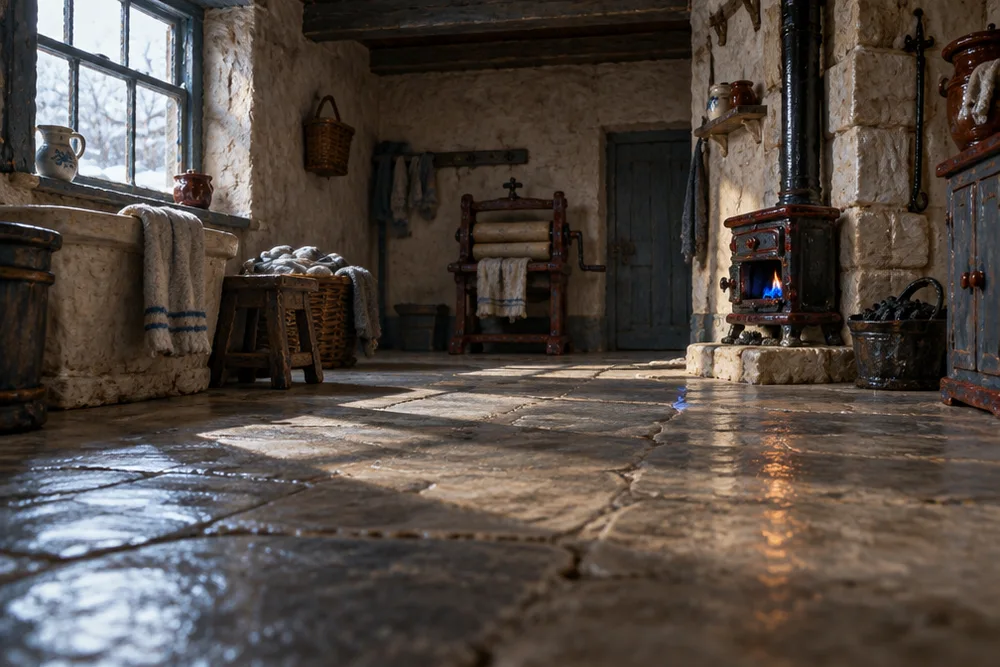
She fed the stove a small lump. The last good heat in it went up in a little blue flame around the lump, and for a moment it seemed she had made the fire worse. Then the coal caught along a split, low down. She closed the door before the draft could take too much of it and brought the settled bill over to the heat. The fold nearest the stamp had grown stiff. She worked a thumbnail under it rather than pull.
There were several amounts on the bill. One she had checked at the time, because the quantity was more than she commonly ordered. She remembered being pleased that the sum for that delivery was right. She had gone over what the station said it was owed, line by line, without once opening the house end of her own book. Why should she have? It was the washhouse bill; the money for it had come from the square tin.
Her entry for the payment was on the wash side, just below the receipt for a bundle delivered that morning. She had written what was left after taking the station money out. Tilda counted it backward now: the balance left, the payment, the money there before. The figure agreed with the sum stamped settled, to the penny. Number 84 was one of the amounts in that sum. It had not been struck through, nor set outside the addition with a note saying it was paid at the yard.
She took the paid slip off the ledge and laid it alongside. There was no use adding the two large sums. Most of the station bill was for coal she did not dispute. All she wanted from it was the line with 84 on it. She bent the paper below that line so she could keep her place while she looked for it again in the house book.
She had not kept the cash in the two tins because there was always enough to keep it separate. She kept it so that, when there was not enough, she could see which need had taken it. A bad week in the washhouse could eat every penny saved toward a joint of meat. On a better week money traveled the other way, and she called it even if she could buy the meat. It had never seemed necessary to give that journey a name.