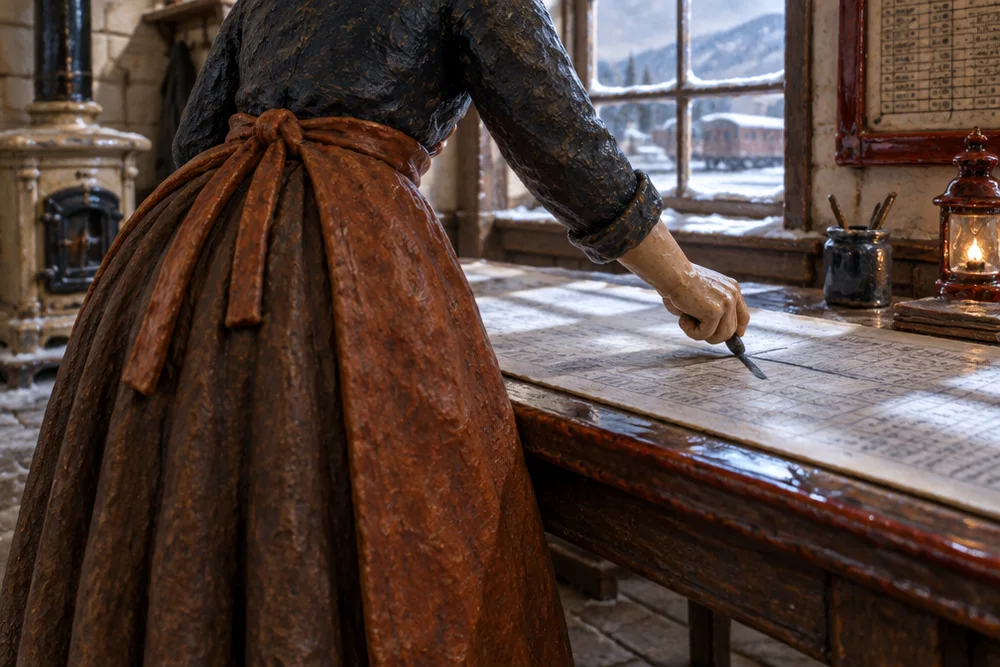
Night School for the Coal Bills
Page 192 of 261
Chapters
“That leaves the first number,” said her daughter.
“It leaves what we can support,” I answered. “And the other delivery stays a delivery, not a refund.”
A man at the far end of the bench shifted his shoulders. “If the railroad made the same mistake everywhere, a little padding won't hurt them.”
“It will hurt the person whose name is on a false total,” I said. “And it will give the district a reason to dismiss the true ones.”
The words sounded sterner than I intended. I kept my eyes on the paper. One of the older women slid her receipt closer to herself, perhaps remembering that I had once been too quick to say what a paper might prove. I did not ask her to push it back.
Mrs. Havel read the correction, then pressed her thumb beside the line. “That's fair. I want my amount, not a story about me.”
I wrote the correction into the foldout, with the original practice total visible on the preceding sheet. That cost us time. The pupils waited while I copied the figures again, and nobody complained. It was a small thing to make a record of a mistake; it was not a small thing to teach them that the record could bear one.
When I finished, Mrs. Havel signed only the corrected extract. Her daughter watched me put the spoiled copy underneath the ledger cover instead of throwing it into the stove.
“Now we know why the foldout needs a place for separate deliveries,” said Marta Keel. She had come straight from the coal yard, charcoal apron dusted with black at the hem, slate kerchief pinned over her close twists. Her long hands rested on the table, one hip set against its edge. “A number can be copied onto the wrong line. The counterfoil tells you whether the yard made another trip.”
“And the paid mark?” asked a pupil.
“That tells you the money was taken at the yard,” Marta said. “It doesn't tell you who paid it if the purchase went on somebody else's account. That's for your other columns.”
I looked down at the foldout. A person's name could appear in several places, and the same dollar could travel through several hands before it came out of someone's pay. Our lesson was not about making the page simpler. It was about making its distinctions visible enough that nobody could collapse them for convenience.