A Key for Every Winter
Chapter 3 · The Line Below Transit
Page 22 of 209
Chapters
The notice on the laundromat door said Weller Wash would be sold in ten days. Iona had written the date in block letters, then taped the paper inside the glass so it would not curl in the alley damp. At Weigh Hall, the same date sat in the lavender checkbook in her coat pocket beside the lender’s cash-to-close figure. She had brought both, though only one belonged in public.
The old municipal scale office smelled of wet wool and hot wiring. A narrow committee table divided the room, leaving speakers in the aisle beneath a budget board crowded with buttercream tabs. Most of the chairs were occupied by people from uphill, their coats dry and their papers clipped neatly. Along the back wall, riders from the night buses stood with work shoes still dusted in flour, metal grit, or the white powder from a bakery’s mixing room.
Iona took a place near the aisle. Her elbows stayed tight to her ribs. At the table, Gwen Sills stood with one knee bent, a long gray skirt falling straight to her shoes. She listened with a folded sheet in front of her and did not interrupt the first speaker, a young man in a reflective vest who said the late bus was how he got home from the stamping plant. If the city shortened the run, he would have to walk under the rail bridge or pay for a ride he could not afford every shift.
“I’m not asking you to make the bus free,” he said. “I’m asking you not to make it disappear before my shift does.”
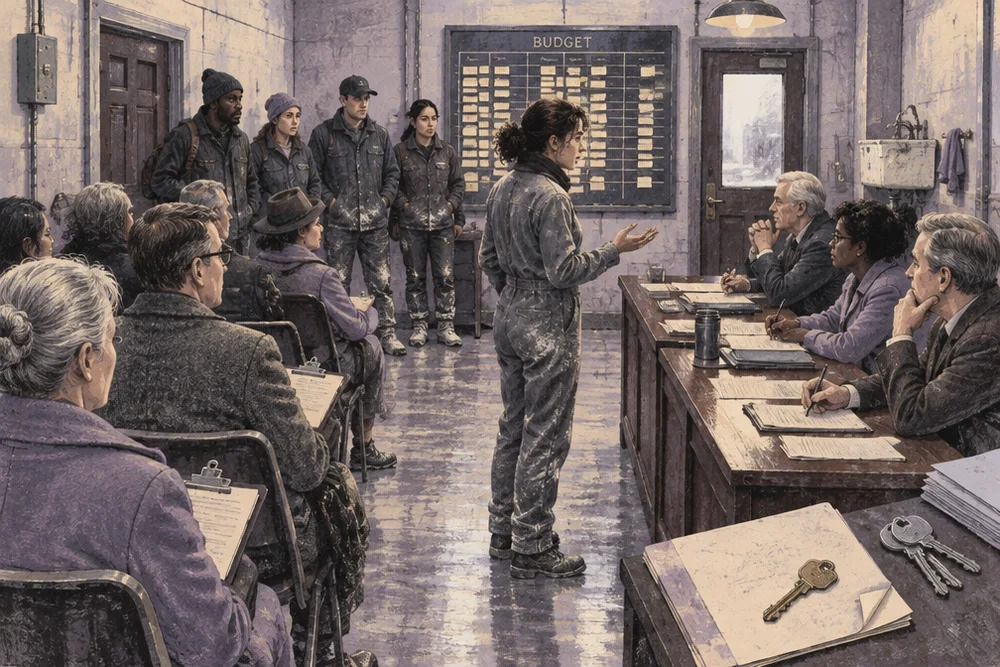
The clerk marked his name on the list. Iona looked at the clock above the doorway. The tenants waiting behind her had been asked to hold their testimony until the transit item was finished. A woman with a grocery-store badge rubbed her hands together, though the room was warm. She kept glancing at the doors as if the next bus might be waiting outside.
Iona had spent the morning counting machines and estimating the value of motors that no longer turned. A missed shift had a clean price. A cold room, she was learning, did not.
A woman who cleaned offices downtown spoke next. Her bus came at the end of her shift, she said, but the transfer did not always wait. When it left without her, she stood beside the road in the dark until a later one came. She did not describe the dark as frightening. She described it as unpaid time, because she had learned which facts survived a public meeting.