A Key for Every Winter
Chapter 16 · The Unanswered Ring
Page 160 of 209
Chapters
The phone rang under the bakery’s order bell, where Hollis had left it facedown beside the flour scale. She knew the number before she turned it over. The old flyer had printed it in large type beneath her name, back when the room’s hours depended on whether she could get there after work. The number was still hers. The flyer was still somewhere, she thought, though she had not seen one in weeks.
She finished scraping dough from the mixer bowl before she answered. The batch had to be covered, labeled, and in the cooler by the time the ovens came free. Her coworker, Len, was lining trays near the rack. The phone rang again. Hollis wiped her hands on her apron and picked it up.
“Hollis? It’s Mr. Dwyer. From the rooms.” The voice came through thin and wind-roughened. “I’m at the underpass. Your paper says the laundry room’s open tonight.”
Hollis looked at the paper taped to the bakery’s staff board: January roster, paid shifts, the cold-night blocks the contract could cover. Tonight’s row had two names. One belonged to a trained relief worker who had called out sick. The other belonged to Mae, listed as coordinator, not as a person who could materialize in two places at once.
“Are you at the pickup?” Hollis asked.
“I’m at the old one. The bus just went by on the other side.”
The bakery’s timer gave a sharp double chirp. Hollis’s eyes went to the dough, then to the window, where the street had turned the color of a wet sheet. She had a clean apron on and a batch at the proofing stage. The public room had a posted schedule and a paid roster. Her old number had no schedule attached to it at all.
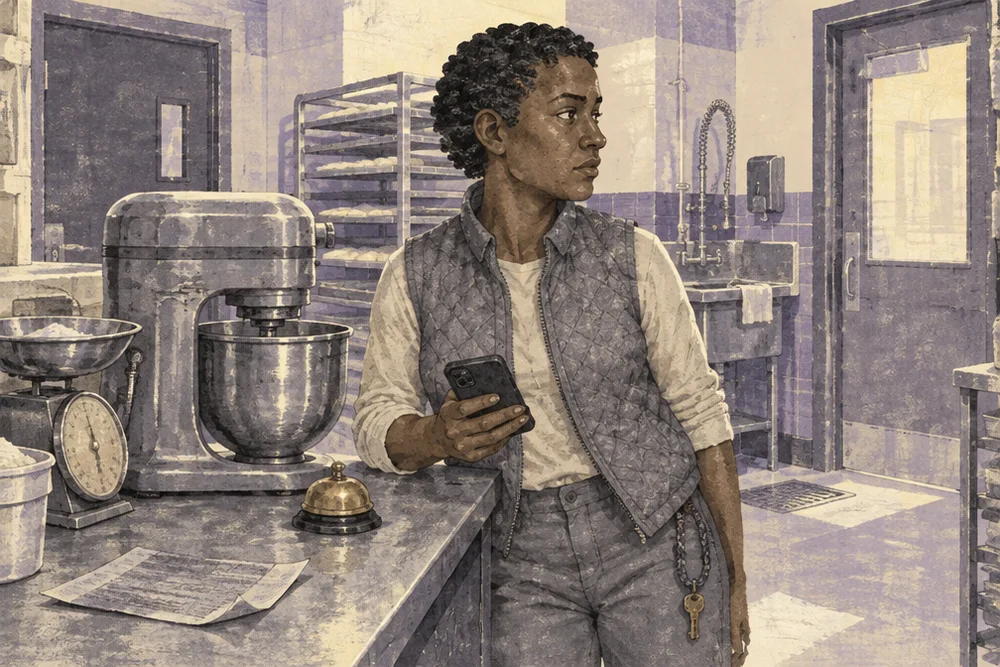
“I’m not at the laundry,” she said. “I’ll find out what’s running.”
Mr. Dwyer went quiet. Hollis heard traffic hiss behind him and, farther away, the hollow clank of a bus over the rail seam.
“You used to come,” he said.
“I did.” She kept her voice level. “That’s not the number to call for tonight’s room.”
“It’s the number on the paper.”
The paper. She had imagined the old flyers turning soft in rain, their ink running down brick, but the call made the old assumption plain: a piece of paper could outlast the promise that had produced it. “Can you get to the current shuttle pickup?” she asked. “Mae can check where it is. Don’t cross the road until you know.”
“I can’t walk all over.”