A Key for Every Winter
Page 204 of 209
Chapters
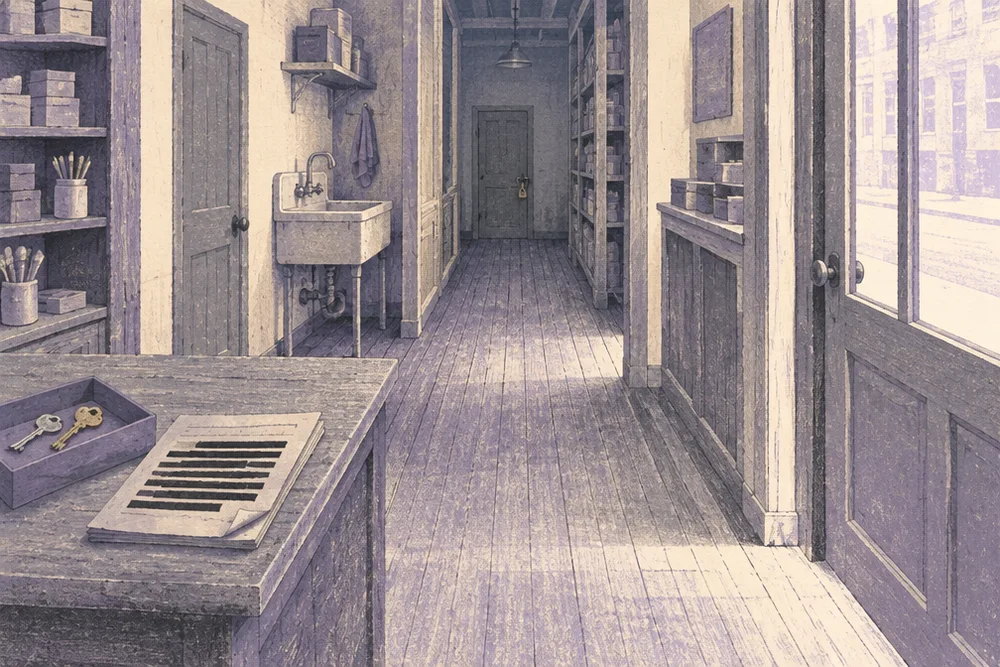
Ruth checked the pile. “That’s the last of them.”
“You’re sure you don’t want the rest for the fitting rooms?” Hollis asked.
“The fitting rooms are small. I’m not turning this place into a waiting hall.” Ruth lifted the remaining stack onto the cart. “I’m an alterations shop. I can put the route notice in the window. I can’t make the room stay open.”
“I know.”
“Do you?” Ruth paused with both hands on the cart handle. “People still ask me if you’re opening.”
“What do you tell them?”
“I point at the date and the other address.”
“That’s right.”
“Sometimes they want me to say you’ll come back.”
Hollis folded the rag over once. “I don’t know what next winter will be. Neither does the city.”
“That’s what I tell them.” Ruth pushed the cart toward the stockroom. The lock on its side stayed shut as she passed, and the toilet route stayed clear on the other side. This had been the bargain: a boundary that could be used, not a wish that everyone would somehow know where to stand.
Mae slipped the envelope of keys into her bag and shrugged into her boxy jacket. “I’ll send you both the closeout report. The March review is public.”
“Send it to the address I gave you,” Hollis said.
“I have it.” Mae glanced at the shop window. “The pilot date is still there.”
“Good.”
Mae paused at the shop door. “You could come to the review, if you want.”
“I’ll see the report.”
“That’s an answer.” Mae left the invitation there without putting a hand on it. The bell over the door gave a small, bright sound.
Hollis folded the rag again and put it on the counter. She used to believe that if she put the right information in front of people, they would understand what they owed. Now she knew information could only say what had happened: which shifts had opened, which had not, how many chairs there were, where the shuttle stopped, what money remained. It could not make the city feel responsible. But it could keep the city from calling a locked door continuous coverage.
Ruth wheeled the last stack toward the back of the shop. “I’m going to shut the stockroom, then I’ll be out front. You can take the chair whenever.”
“I’ll carry it now.” Hollis lifted it by the frame. It was lighter than the bakery trays but awkward enough that she could feel the angle of it in her shoulder. She stopped at the shop entrance and turned it sideways.