A Key for Every Winter
Page 154 of 209
Chapters
Iona watched them leave the public room and stop beside the glass. The woman pointed at the new notice, then at the old pickup listed on the folded paper. Her brother listened to the phone and shook his head. They had not made a fuss. They had not received what they had expected either.
The attendant kept the room orderly. The chairs stayed within their boundaries; the toilet route remained clear. Someone refilled the water cups. A visitor asked when the opening would end, and Tasha answered with the time posted on the door. Every operation worked as planned, except that the plan did not deliver a ride to the place where it had first promised one.
Iona wrote the time the siblings left the vestibule. She did not mark them as transported.
The shift lead brought the capacity sign back from the doorway to check its hinge. Its stiff fold had caught against the frame when she turned it earlier. Ruth found a small screwdriver in the shop drawer and tightened the loose screw while the sign lay flat on the counter.
“It’ll swing easier now,” Ruth said. “No need to make somebody wrestle it when they’ve got a line of people watching.”
Tasha tried it once. The sign turned smoothly, fourteen facing the room, FULL facing the entrance. She set it where it could be reached without crossing the clear path.
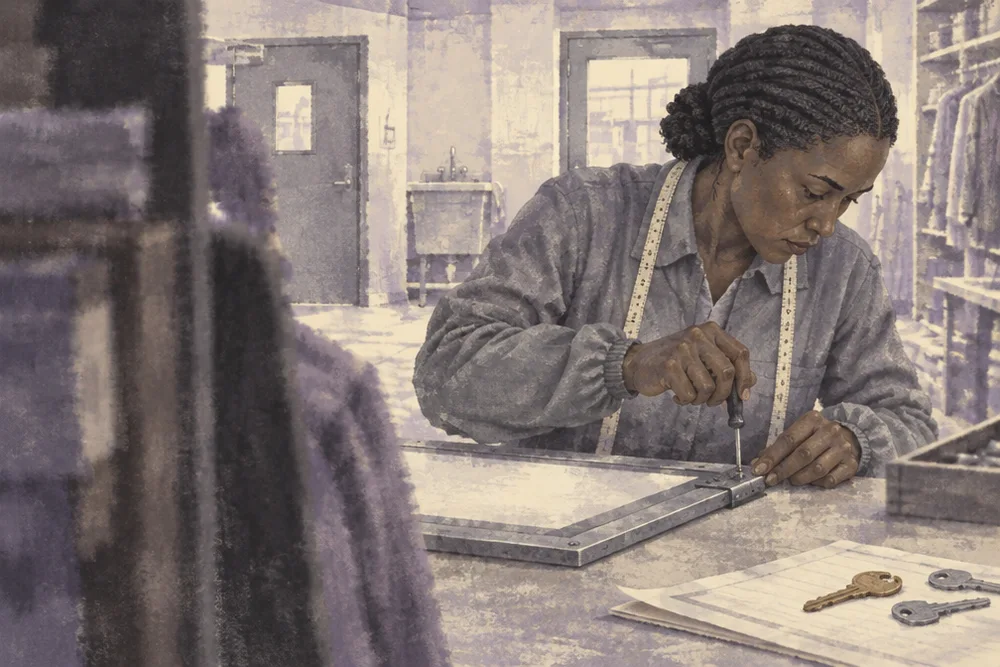
Iona watched the small test and thought of her father’s old brass key, nicked on the bow. For years, the lock had turned only when Hollis came. The new steel keys had been counted, assigned, and put away according to a roster. Their usefulness had never depended on a single person hearing a knock. Still, a key did not create chairs, and a schedule did not make the shuttle stop at the right curb.
Mae came back from the vestibule with the shift phone. “They’ve got the next run,” she said. “The driver will use the post office curb. Dispatch still can’t confirm whether the earlier pickup was made.”
“Is there another route from here?” Iona asked.
“There’s the late bus, but it isn’t shelter, and it doesn’t meet the room’s hours all the way through. We can tell people what it does. We can’t call that a ride home for everyone.”
The careful distinction calmed nothing. Iona glanced at Cal, who had finished his water. He was talking to Tasha about the bus schedule, asking when it stopped serving the lower route. Tasha had the printed timetable open and was tracing the times with one finger. The two of them bent over the page without leaning into each other’s space.