A Chipped Sugar Bowl and a Missing Street
Chapter 6 · Things That Take Water
Page 65 of 243
Chapters
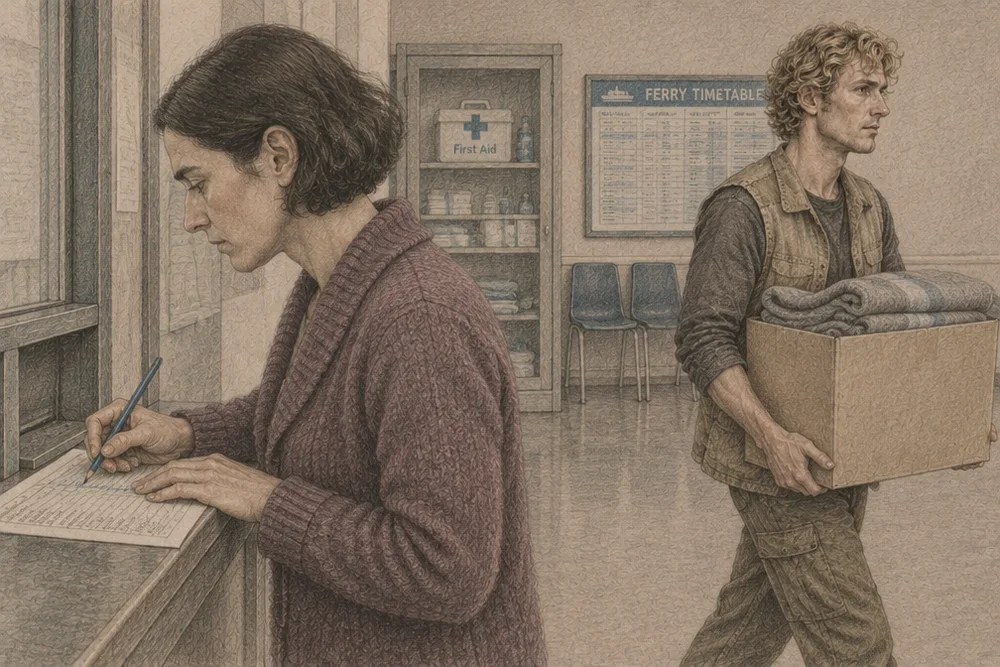
By Tuesday morning, the shop smelled of wet wool, cold tea, and the river’s dark mineral breath. Beth had slept on a folded coat in the loft, waking whenever someone shifted below or the wind worried the quay door. Now the emergency shelter was moving inland to the council depot, where the vehicle bay could be heated and the floor hosed down. The last evacuees were being counted into minibuses. A woman in a borrowed cardigan held a paper cup in both hands as if it were something breakable.
Beth stood at the ticket hatch with a pencil and a list of names, correcting the spelling of a child’s surname while Lewis carried a box of clean blankets toward the door. The shop’s sale stock had become furniture by accident: a glass-fronted cabinet held the first-aid kit, two chairs leaned against a display of old ferry timetables, and a chipped sugar bowl served as a dish for the keys to the back cupboards. Every object had acquired a new job without asking permission.
“The depot has room for the last four,” Ivo said from the doorway. His navy fleece was dark at the shoulders, his close-cropped grey hair still damp. A radio clipped to his collar crackled when he leaned in. “We’ll take the register there. Nobody needs to stay here because of the shop.”
Nobody, Beth thought, except the person who owned the shop and the people who would soon expect it to answer a telephone. The old wall phone hung beside the ticket hatch, its curled cord now dry, its black receiver polished where Ruth’s hand had held it. Since the night it rang, Beth had heard it in memory whenever the building creaked.
She set the list down. “Ada’s due to inspect the place.”
“Then she can inspect it without a shelter in it,” Ivo said. “That’s the idea.”
He sounded tired rather than impatient. His shoulders sloped forward as though the whole wet town had been laid across them. Beth nodded, and watched the final minibus pull away from the quay. Its rear windows reflected the pale sky; the passengers were only silhouettes behind the glass. The shop seemed to become larger and emptier as soon as it left.
Ada arrived carrying a tape measure, a canvas tool bag, and a folded plan of the shop. Her copper undercut was flattened on one side by the rain; a red kerchief was knotted at her throat. She stepped carefully over the threshold, testing the boards with a strong wrist braced on the doorframe. Her bib overalls had clean knees, but one cuff bore a streak of pale plaster.