A Chipped Sugar Bowl and a Missing Street
Chapter 5 · A Key for Every Door
Page 54 of 243
Chapters
Lewis had been sent to collect the brass coat hooks, the folding screen and anything else that would fetch enough to matter. Beth had put a price beside each thing on Ruth’s inventory, in the square, impatient hand she used for labels. He had taken the list and a screwdriver, then found himself carrying neither into the street. The power had gone out along the quay. Across the water, the estuary had become a single dark plane, interrupted by the shine of floodlights and the occasional pale window above the rising water.
While Beth was at the depot, the first crew was finishing its check of the cottages on Sill Row. He could see the backs of them from the quay if he stood at the terminal’s high window and leaned past the old timetable case: a row of low roofs wedged between the railway embankment and the nursery’s shuttered glasshouse. Their lights had gone out one by one. The official map had called that patch railway land. Now people were coming out of it with blankets over their heads, being guided toward the raised road and the waiting vehicles.
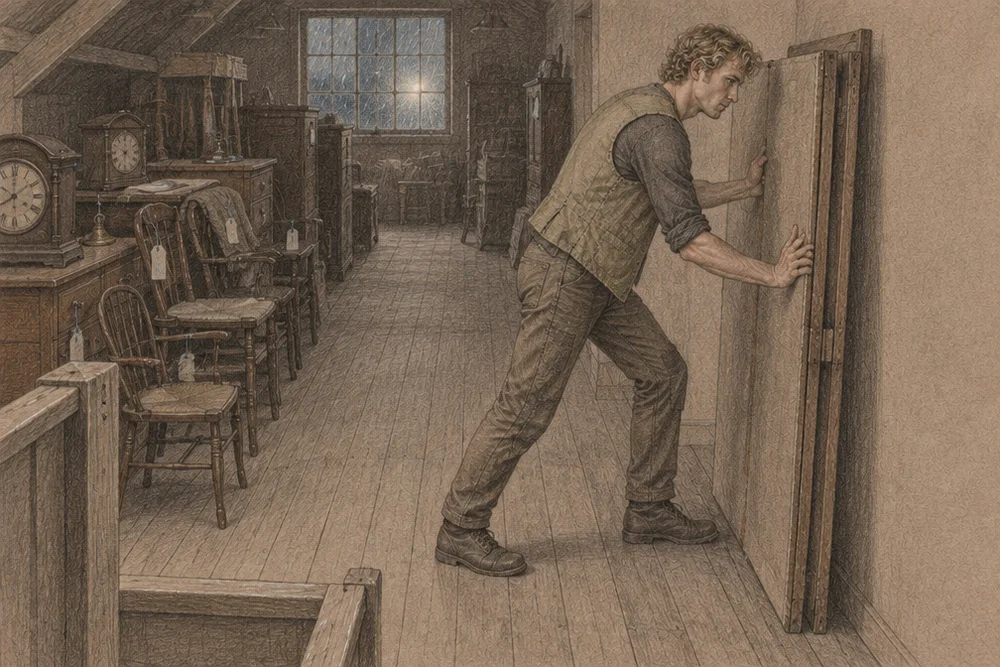
Lewis returned to the shop and hauled a box of brass fittings away from the foot of the loft stairs. The room above the sales floor had stayed dry. Sale stock was stacked there in careful, narrow aisles, every chair and clock marked with a tag. He pushed the folding screen flat against the wall and unrolled the old ferry-company mat over the boards. If anyone needed somewhere out of the weather, they could sit there. It was not a shelter, he told himself. It was a dry place to wait for a lift.
Beth rang from the depot with the first transport times. She put him on speaker, and he could hear the dispatch radio behind her. Short bursts, clipped questions, the answer swallowed by static. He knew those sounds. At the ferry he had waited on the quay while Beth worked the radio, able to hear every voice and unable to make himself useful. The old habit rose in him: wait for her to tell you what to do. When she ended the call he kept his hand on the receiver for a moment, then let go. Tonight, it was not his job to be the voice on the line.