A Chipped Sugar Bowl and a Missing Street
Chapter 17 · Ordinary Names for Water
Page 162 of 243
Chapters
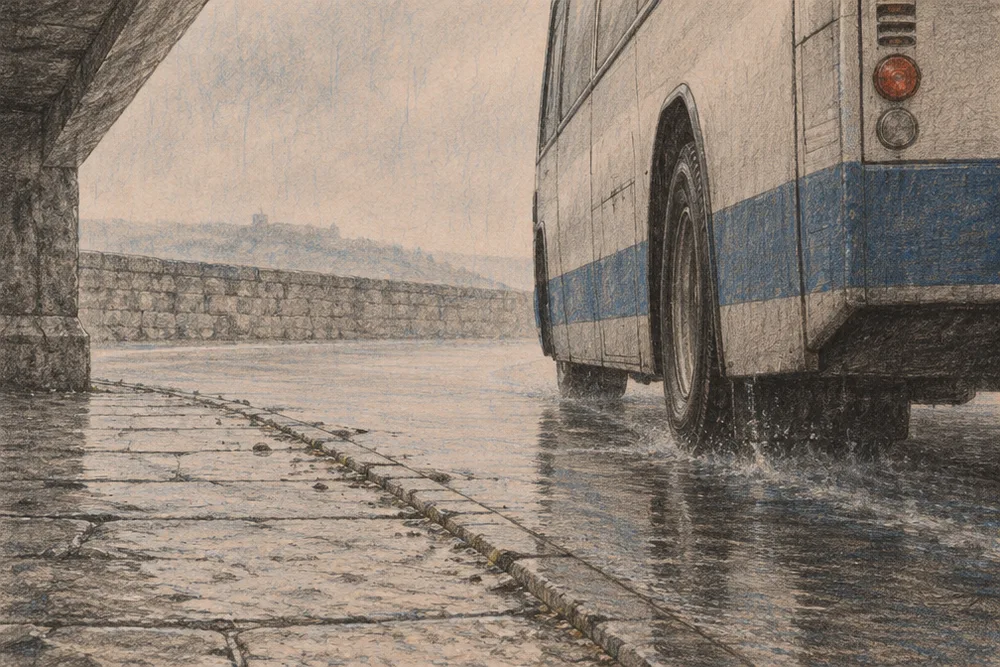
Lewis met the first bus at the stop beside the old customs wall, where the route turned inland and the pavement narrowed to a strip of wet grit. The driver, a woman named Maureen, had six minutes before she was due to take the empty bus back to the depot. She stood with one hand on the wheel and the other holding a paper cup between her knees while Lewis leaned in through the open door.
“You want names people actually use,” she said, “or names the council can print?”
“Both, if they’re different.”
She looked at him as if he had asked for two separate tides. Then she pointed through the steamed glass toward a low block of buildings behind the railway embankment. “That’s the old glassworks. Everyone calls the bend there Glasshouse Corner, even though the works came down before I started driving. The sign says Railway View. Don’t put that on a card unless you want somebody asking where the railway view is.”
Lewis had brought a notebook and a folded printout of the dispatch sketch. On it Sill Row had been pencilled in blue, a narrow strip between the nursery and the cottages. It looked obvious now. It had not existed on any official map they had been handed during the flood.
“When you say the bend,” he asked, “which side of the stop?”
Maureen made a small circle with her cup. “The side with the dead lamp post. But people mean the corner where the road dips. Same place, unless it’s raining hard. Then you say the high kerb.”
He wrote both phrases down. His pen snagged on the damp paper. He added a little box for the lamp post, then a line for the sloping road and a mark where the kerb stayed above the gutter.
“You’re making a map of how people talk,” Maureen said.
“Trying to make it useful to somebody who wasn’t born here.”
“That’d be a novelty.” She smiled, but not unkindly. “The old names are still useful. Just don’t pretend everybody agrees.”
The bus pulled out with a sigh of air brakes. Lewis remained under the customs wall’s shallow overhang, adding the driver’s phrases to the sketch. The rain had eased to a fine drift, enough to silver the road and bring out the dark seams between the paving stones. A boy in a school coat crossed from the newsagent’s with his hood half off. Lewis asked him whether he knew Glasshouse Corner.