A Chipped Sugar Bowl and a Missing Street
Page 48 of 243
Chapters
“We shouldn’t invent a person because a house is closed.” She heard how blunt it sounded. “But we can return after we’ve checked the others, or ask the neighbour if they know who lives there.”
Ivo nodded and repeated the instruction. The crew called out once more. No answer. The adjoining cottage’s occupants, already gathered on the track, said the house was empty since the previous winter. Beth asked them to confirm they had seen it empty themselves; they had. The crew marked it as apparently unoccupied and moved on.
The upper caller’s connection remained open. Beth could hear her speaking to someone beside her, names indistinct. She asked the woman to tell her if she saw another light or heard someone call for help. The woman said she would. She had reached for her coat after all, and her voice had a little more strength in it.
The depot’s lights did not return. A dim battery lamp on the desk sharpened the edges of Ivo’s paperwork and made the wet window glass look black. Beth could see only their reflections: her own dark bob, Ivo’s rounded shoulders, the clerk standing with both hands around the thermos she had rescued from the floor.
The radio crackled. “We’re moving to the far end. We can see the bus from here. No one in the street, but there’s a light in the last house.”
Beth leaned closer. “Check it. Don’t assume it’s a person until you have contact.”
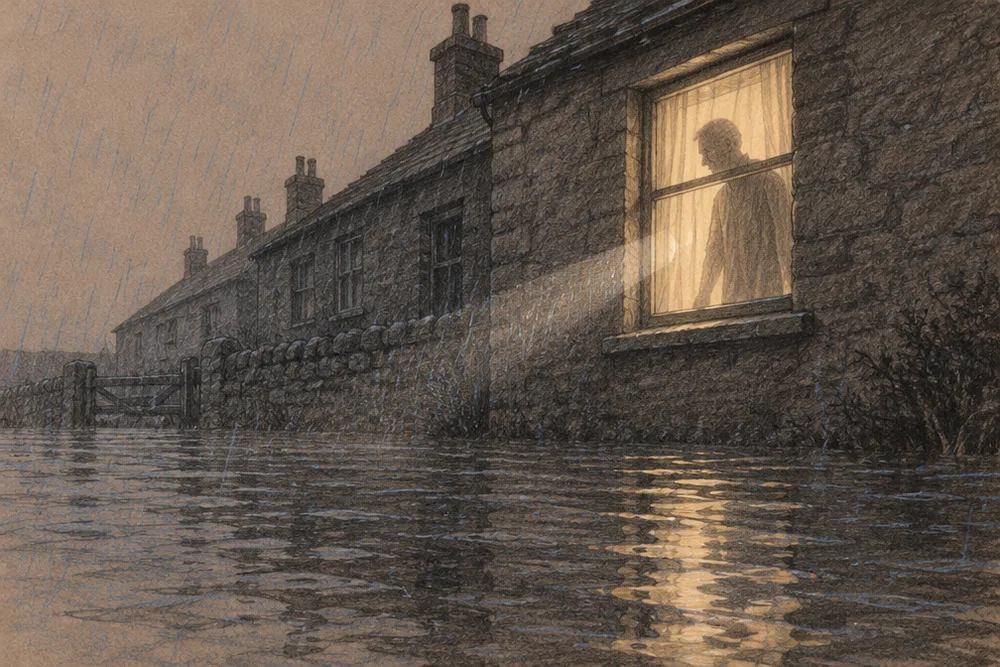
The crew called the last house three times. On the third, somebody knocked from inside, hard enough for the sound to carry over the radio. They answered with a torch against the window, then waited. A shape moved behind the curtain.
“One person,” the crew reported. “They’re coming to the door. Slow.”
Beth listened to the movement in the background: footsteps, a latch, a voice giving instructions. The caller on the open line said she could hear them too. No one on Sill Row had to be guessed at now; each house was becoming a reply or an absence that could be checked.
The crew got the last person up to the track. They had found an older man in a back room, unaware that the water had crossed the yard. His hearing was poor. The light in the window had been a battery lantern. He had not heard the first knocks because the television had still been running on battery power.
“That’s the last occupied house we’ve reached,” the crew said.
Beth let the words land before she asked the necessary question. “How many people have you moved?”