A Chipped Sugar Bowl and a Missing Street
Page 239 of 243
Chapters
Beth had used to imagine a clean ending as a door shut firmly behind her. Instead, the work had become a set of smaller things she could leave in other hands: a corrected map, a consented record, a duty standard, a number that now belonged to the town’s service. She had carried the sugar bowl out because it was hers to carry. She had sold it because she could. None of those acts made the others less real.
At the corner, she stopped to let a delivery van reverse through the narrow street. Its driver checked his mirror and lifted a hand in thanks. Beth lifted hers back. The van edged toward the quay shop, where Ada would clear the delivery lane and bring the new stock inside. Nobody needed Beth to guide it through.
The four pounds in her pocket tapped softly against a key as she walked. She thought of the price written on Monday in her own square handwriting, beside a row of objects that had seemed to require a decision from her. She had been right about the bowl. It was worth four pounds, not because the number could account for its history, but because someone wanted it and she was willing to let it go at that price.
Behind her, the shop bell sounded again. She did not turn around. A phone rang somewhere across the quay, at the depot, and the relief operator answered. Beth kept walking, the damp air cool against her face, while another person took the call.
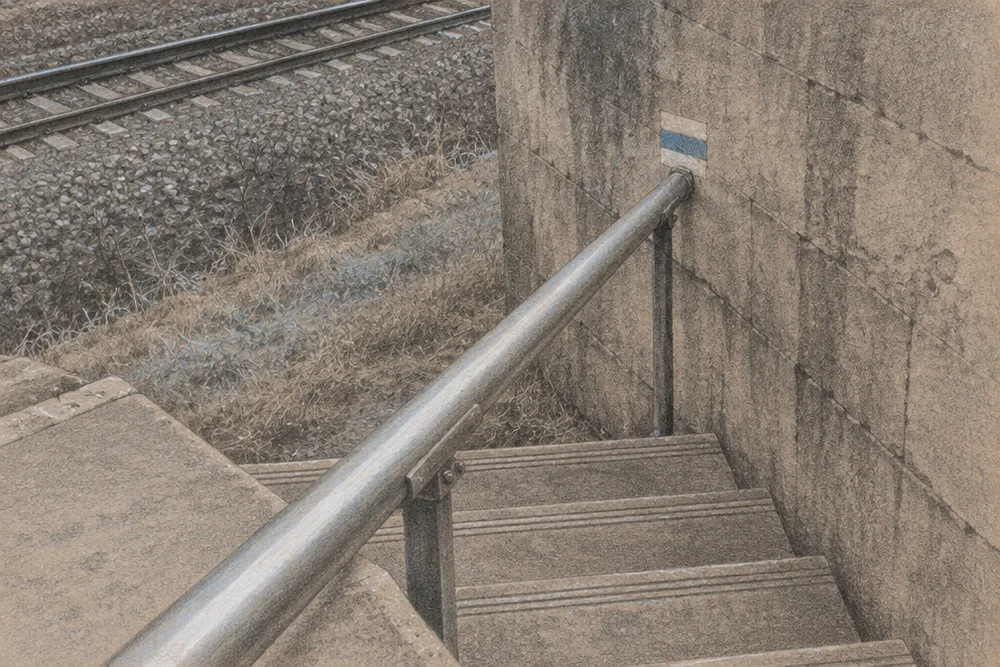
She took the longer route that climbed above the old ferry approach. From there she could see the underpass entrance, shut behind its winter barrier, and the rear stairs that rose between the railway embankment and the first cottages. In the months since the flood, a new handrail had been bolted beside them. It gleamed faintly in the grey light. A small painted marker showed where the steps continued behind a wall.