A Chipped Sugar Bowl and a Missing Street
Page 20 of 243
Chapters
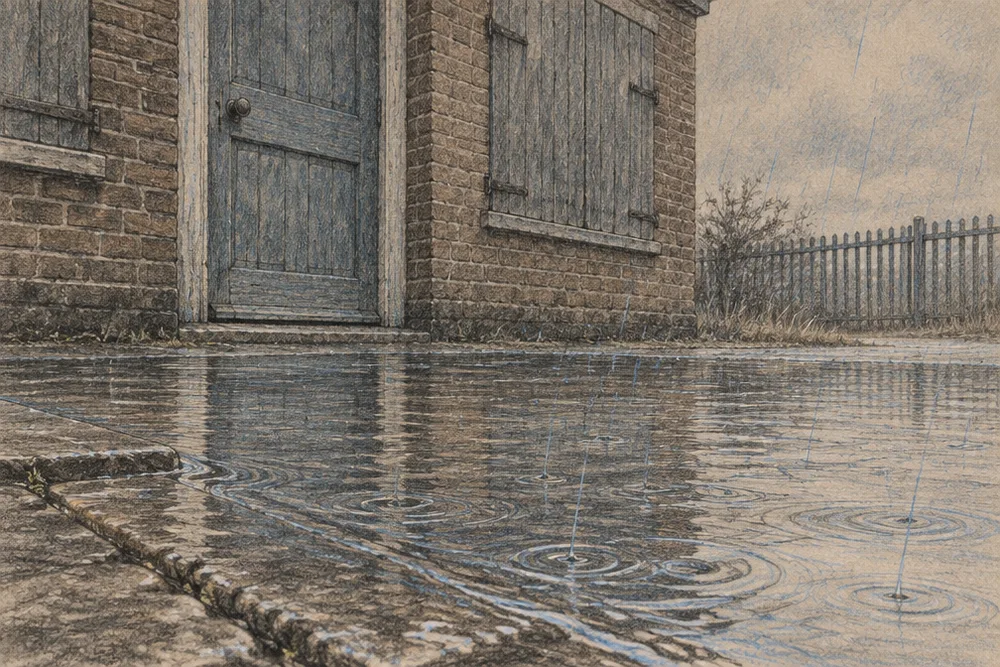
Beth found the flood card with her free hand. The word nursery was printed on it in faded blue, beside a small box labelled public refuge. She remembered the building as a place with a wide porch and a gravel yard; its shutters had been closed for years. “Are you inside?”
“Yes. We’re in the back room. The front doors won’t open.”
“How many people?”
“Five children, me and another staff member.”
Beth’s eyes went to the clock on the shop wall. It was working, unlike the one Nisha had described, but it seemed to have slowed. “Is the water in the building?”
“Not in this room. There’s water in the yard. It’s coming through the porch.”
“Are you upstairs?”
“There isn’t an upstairs. We’re in the back room, raised a little above the floor. The children are on tables.”
Beth put her palm flat on the counter. “What can you see from a window?”
“The railway fence. And the cottages behind us. The water’s between us and the road.”
“Are there lights in the cottages?”
“Some.” The caller’s breath hitched. “I can’t see the doors.”
“Stay in the room. Keep the children together and away from the windows if the glass is shaking. I’m putting you through to the duty desk.”
“Will they come?”
“They’re working on it.” Beth did not say yes. The word would make a promise she could not keep.
She called Ivo and repeated the location. His questions came fast: nursery entrance, road access, number of people, water depth. The annex, he told her, showed the nursery as a closed building outside the flood zone. There was no marked rescue point there. Beth asked the caller whether the main gate faced the road or the railway fence. The answer was unclear; a locked shutter and rainwater filled the caller’s view.
The duty officer returned to the line. “We’ll log the nursery. We’re already routing the first crew.”
“They’re five children and two adults.”
“I have the count.”
“And the cottages?” Beth asked.
“What about them?”
“The caller can see lights behind the nursery.”
“They’re railway land.”
Beth looked at the hand-drawn map, where the railway line ended in a neat boundary. Beyond it were no homes, no doors, no people. She heard the child cough again.
“They’re not empty,” she said.
The caller gave Beth a name at last—Mara—and said she was a nursery assistant, not a teacher. She had worked there for three years, long enough to know the back room’s old radiator clanked whenever the heat came on. The radiator was silent now. Beth wrote the name and headcount beside the time, careful to keep the pencil from tearing the damp paper.