A Chipped Sugar Bowl and a Missing Street
Page 11 of 243
Chapters
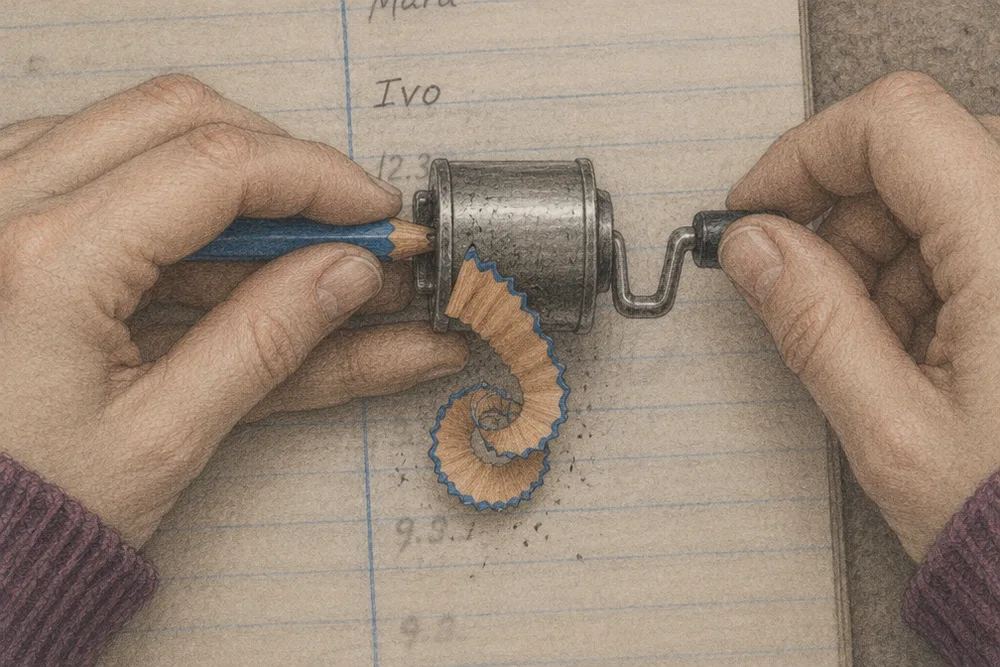
After the line went dead, she wrote Ivo’s name beside the earlier note. Her pencil point had gone blunt. She sharpened it with the small metal sharpener from the till drawer, turning the handle until a dark spiral of wood and graphite dropped onto the page.
The page looked official only because Beth had ruled the margin with a straight edge. She could feel the old habit taking shape in her hands: make the details legible, keep track of who had been told, leave a space for the next action. It was not the same as having authority, or a map, or a crew on the way. Still, it was something she could do without pretending to know what she did not.
“You need to call the number on the card,” Lewis said. “Maybe it’s got a better line than the council.”
“That number was the council.”
“It was printed for emergencies. They must have had a reason.”
“The reason was the ferry office answered it.”
He looked at the handset. “Ruth kept it working.”
“Ruth kept everything working, until it wasn’t her job.”
Lewis turned from the window. He had heard the sentence, but did not answer it. Beth wished she had not said it—not because it was untrue, but because it belonged to some other conversation, and this one had a woman waiting on a terrace.
She dialled the flood card number again, in case a different route through the menu led to someone with better information. The recorded voice offered options for reporting blocked roads, requesting sandbags, and speaking to the council. Beth pressed the last number. A ringing tone followed, then a voicemail greeting. She did not leave a message.
“Can we call back Nisha?” Lewis asked.
“I already tried. She hasn’t answered.”
“Maybe she’s lost signal.”
“Maybe she’s talking to the people with her.”
“Could she see the bridge from where she is?”
“She said there’s water between her and the bridge. That could mean she can see it. It could mean she knows where it is.”
Lewis gave a small nod. “You’re right.”
The concession made Beth look at him. He had not said she was right in years, or perhaps he had and she had forgotten. He picked up the van key, turned it once in his hand, and put it down again.
“I can wait here,” he said.
“You came to collect the fittings.”
“They’ll still be here.”
Beth did not tell him to go. There was a comfort in having another person in the room, but she did not want to mistake company for a plan. She moved the bowl a few inches to make space for her notebook, the chip still visible under the lamp.