What the Tiles Remember
Page 48 of 220
Chapters
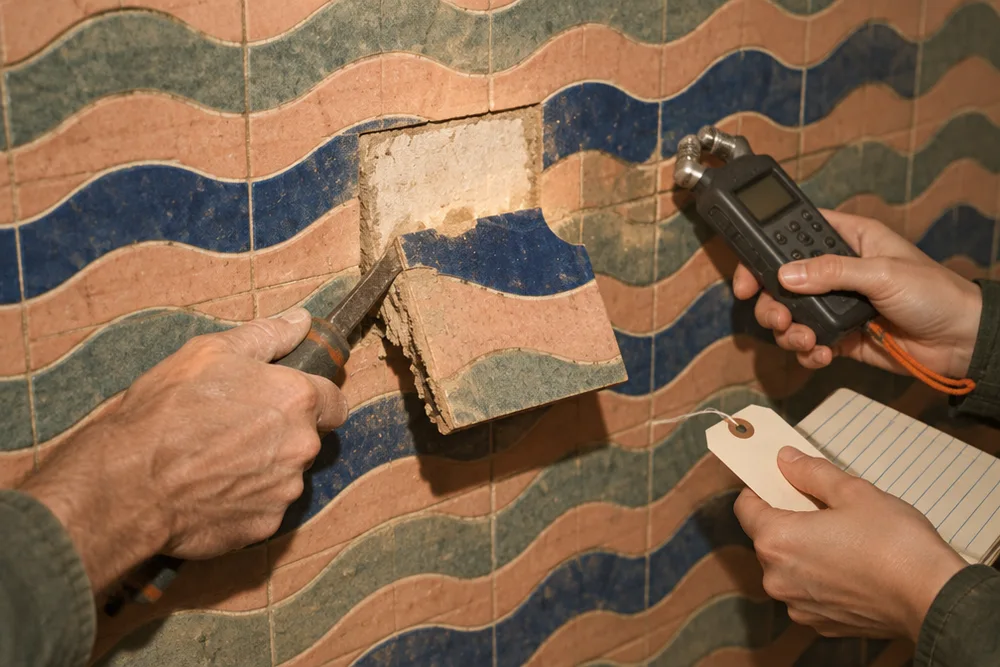
While Ivo tested the first section, Mara held the recorder close enough to catch the soft knock of his tool, then lowered it when he stopped. The hall gave back a hollow echo. Somewhere outside, a truck reversed with three clipped beeps. She had not yet found a way to record what the photographs did not show. For now there was the wall, Ivo’s careful listening, and the mark of a question on a cream tag.
The next morning, Mara came to the baths with a bundle of altered uniforms in her arms and a stack of receipts in her coat pocket. She had delivered the hospital order before opening the shop, then walked back through streets where the spa signs promised mineral renewal in gold lettering. On the lower streets, people were already checking the work barriers around the flats. Replacement drainage meant something different to them than the bathhouse’s nostalgia did. Mara could not ask them to wait so she could save one more row.
Ivo was setting out tags on the bench. He had written crate numbers in block letters and left spaces for row, position, and condition. “You can’t fit all that on one tag,” she said. “Then we use two.” He handed her a pencil. “One goes with the crate. One stays with the map.” Mara sorted the tags by number, matching his method to the pictures she had brought. A photograph showed the top of a wave but not the point where it broke. She stopped herself from placing it against the wall. “We’ll do it as we go,” she said.
They began with a section whose backing seemed sound. Ivo worked from the hall side, easing the tool beneath the edge without forcing it. Mara watched the seams, one hand ready with the tag. When the first small piece shifted, she took a breath too sharply. “Not yet,” he said, and eased it back into place. His voice stayed low. “We don’t need to win a race against the wall.” The tile held. He adjusted his angle and tried again, and this time the piece came free with a trace of old mortar clinging to its back.
Mara recorded the crate and position, then wrote the same information on the map tag. It took longer than she had expected. The two records felt repetitive until she imagined one being lost or smeared. She tied one tag to the crate handle and set the other aside. Across the room, the mural still looked nearly whole, but the first open place in it showed the pale backing beneath.