What the Tiles Remember
Chapter 1 · The Row That Moves
Page 1 of 220
Chapters
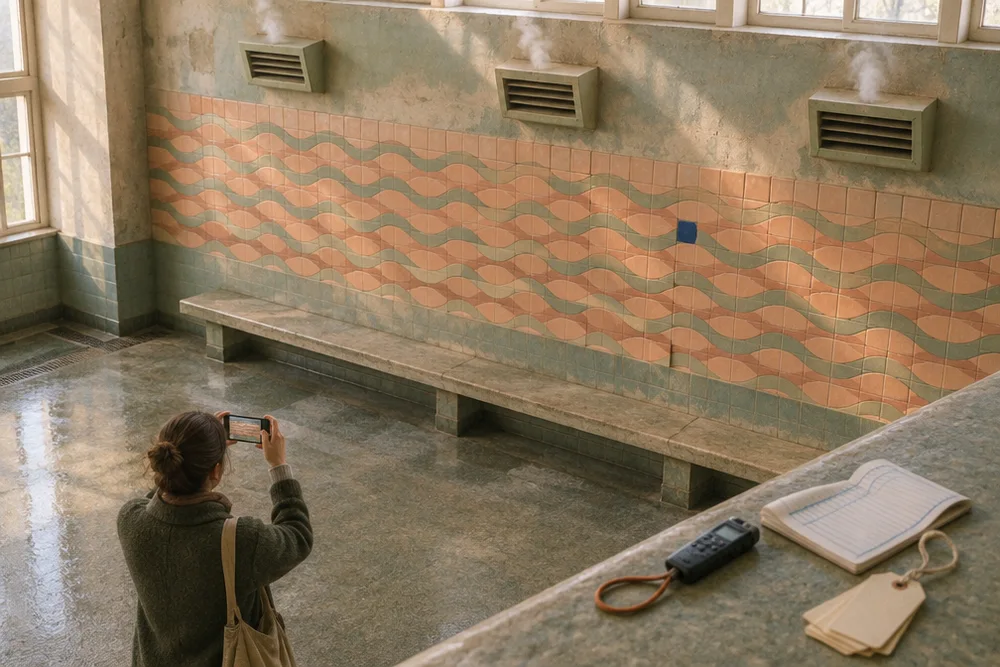
At nine in the morning, the Juniper Baths smelled of wet plaster though the taps had been dry for years. Mara stood beneath the steam vents with her phone raised, trying to make three cropped photographs agree with the eleven rows of peach-glazed tile in front of her. The pictures had been taken at different times: one for a town brochure, one by a visitor who had cut off the left edge, one by Ada herself, close enough to show a wave and not its beginning. None held the whole mural. None showed where one row ended beneath the bench line.
Mara enlarged the oldest photograph until the tiles broke into squares. “That blue one should be here.” She lowered the phone and pointed to a place above the old child-minding bench. “Unless the camera was tilted. Or Ada moved it after this.”
The mural’s wave climbed from the left, dipped, then rose again, a warm current of cream, rust, sage, and blue. The blue was scarce, just a few squares among the peach. In the picture, a crease of reflected light hid the center. On the wall, two tiles near the dip sat proud of the surface, their edges dark with loosened grout.
Mara stepped back to compare the whole sweep. A soft tick sounded above her. She looked up in time to see a pale tile shift a fraction of an inch. She put her phone down and held her breath until it stopped.
Six days. The date had been printed in black on the demolition notice bolted beside the entrance. The shared drain under the baths had to be replaced before the occupied flats above the lower street could be connected to their new line. No one had offered to delay that work. Mara had signed the paperwork knowing the slot was fixed. The collector’s deposit had bought her a month after Ada’s funeral, not a reprieve from the town’s need.
She crouched by the bench and opened the folder she had brought from Hem & Turn. Inside were the photographs, a hand-drawn grid, and a receipt for the deposit Tess Saye had advanced against the mural. Mara had promised Tess an intact work, or as near to intact as the salvage could manage. In return, the money had covered the funeral balance and kept the shop’s rent from swallowing the month.