What the Tiles Remember
Page 19 of 220
Chapters
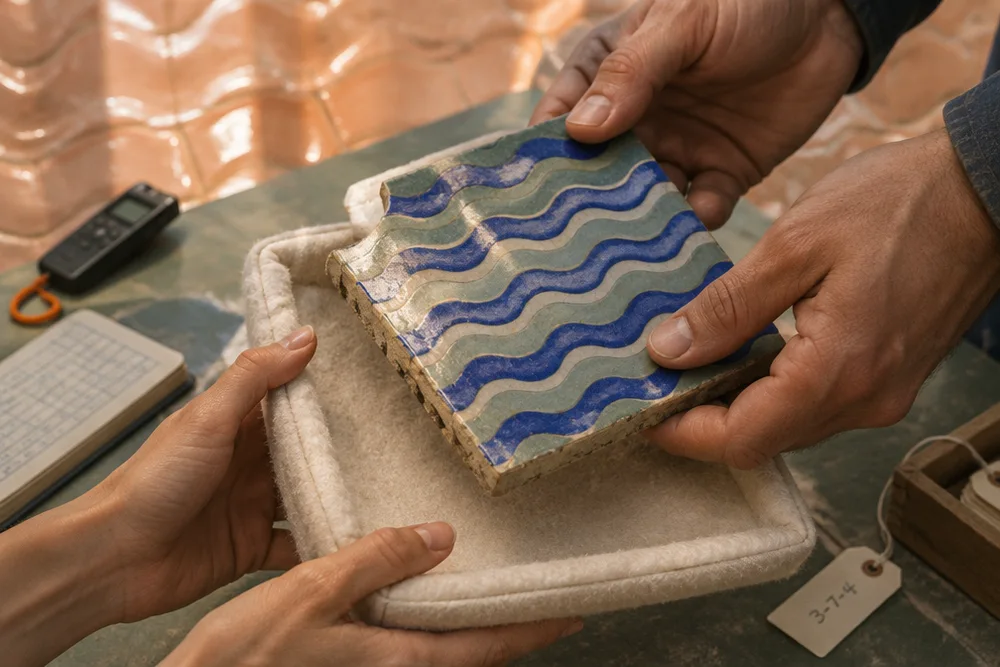
She held out the padded tray. Her fingers were long and careful, her thumb trembling once as I transferred the tile. The back held a thin crust of old mortar. We made a cream tag for it, matching the row and position in our notes, then wrote the same number on the crate card. She recorded the tag in the audio, and I read it back to check.
The tile settled into its place in the tray without a click. There was no applause, no revelation. There was only one piece of Warm Current no longer fixed to a wall scheduled to be demolished.
Mara touched the edge of the tray, not the tile. “It’s smaller in my hand than it was up there.”
“That’s usually how walls work.”
“I know.” Her gaze moved to the shallow gap where it had been. “I thought I’d feel relieved.”
“Maybe you will later.”
“Maybe.”
We got three more tiles before the mortar changed. The fourth resisted with a different sound: a dull, close knock instead of the light ring I’d been following. I stopped, shifted my weight, and tapped the neighboring face with the wooden handle. The tone was hollow at its lower edge.
“That one’s loose too,” Mara said.
“Or the backing is.”
“Can you tell?”
“Not from here.” I leaned down, knees bent, to bring my ear closer to the wall. The tile’s edge didn’t lift cleanly; a hairline crack ran beneath it and disappeared under the next piece. If I forced the wedge, I could take the row with it. “No. Not safely.”
She looked from the crack to the tagged tray. “We can leave it for the next shift?”
“We can leave it until we know what the join is doing. I’ll mark it as held, not missing.”
Mara picked up the recorder. “Do I say that now?”
“Say what we know.”
She recorded the row again, identifying the three recovered tiles, the doubtful backing and the one held in place. Her voice sounded steadier this time. The song had found a place beside the facts without having to carry them alone.
I made a note on the crate tag as well. Tag 1: first section, four positions examined, three lifted, one held. We had begun with my wedges and her memory, but now the record could travel with the pieces. If the audio failed, the tags remained. If the labels blurred, we still had the recording. Neither could reconstruct what the other had never captured.
“We can do this,” Mara said.
“We can do this section.”
“You never give me the whole sentence.”