What the Tiles Remember
Page 109 of 220
Chapters
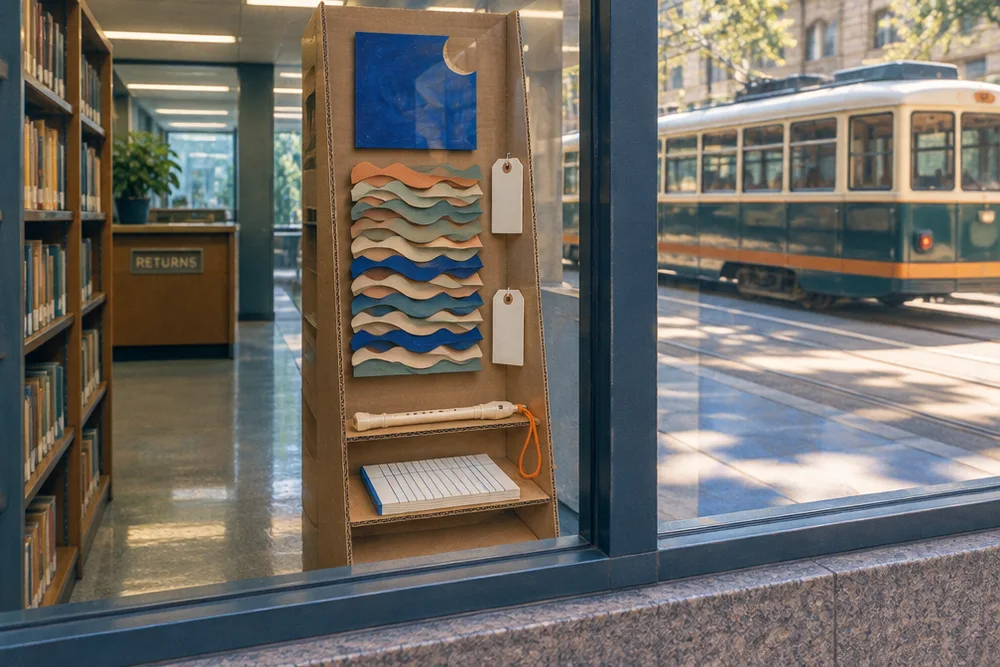
“The lane.” Perrin tapped the clipboard. “The rest are paperwork.”
“Paperwork is not nothing,” Mara said.
“No,” Perrin agreed. “It’s how we keep the promise after the person who made it is gone.”
Mara looked at the cardboard, and Ivo understood that the sentence had landed somewhere deeper than the display allocation. She had spent weeks keeping Ada’s work from becoming a pile of unlabelled pieces. The library’s forms were another sort of joining: not mortar, not a song, but a way to say what could happen to the fragments when the people in the room had changed.
Ivo folded the paper edges inward so the mockup would fit through the office doorway. “I’ll make a clean elevation and attach the quote.”
“Send it to me,” Perrin said. “I’ll add the facilities note and the allocation terms. Then Mara can take the packet to Tess.”
Mara picked up the food bag. “I’ll take it when I have the release question in front of me. I don’t want to show Tess a plan that sounds like I already have permission.”
“That’s sensible,” Perrin said.
“It’s also annoying,” Mara said.
Ivo laughed once, and Mara’s mouth answered with the beginning of a smile. Outside, a bus pulled away from the stop. Reflections slid across the glass, briefly washing the paper waves in a band of streetlight.
Before they left, Ivo asked Perrin to initial the measured dimensions. She did, then added that approval of the fixing points would come from facilities, not from her. He liked the precision of that distinction. It kept a good conversation from becoming a promise nobody had the authority to make.
Mara walked with him to the door. The paper bag swung against her leg. “You think the panel will work?”
“I think it fits the bay. I think people can get past it. I think we can mount the section without pretending it’s the whole mural.”
“That wasn’t what I asked.”
He paused on the threshold. Her eyes were wide-set and dark, attentive without asking him to flatter her. He could not tell whether she meant the panel or the larger effort of making a public place for the pieces. “I think it’s worth trying,” he said. “Whether it works will depend on what the tiles tell us when we lay them out.”
She tipped her chin once. “That I can answer.”
Perrin followed them to the door with the allocation sheet tucked under her arm. “You can pitch this. You cannot promise the panel until the title is settled, the quote is approved, and facilities signs off.”
“We understand,” Mara said.