What the Ledger Left Blank
Page 51 of 301
Chapters
The pay envelope was not an envelope. Jory counted coins onto the counter, one worker at a time, and entered each sum in his book. A few shillings and pence made a little bright heap before Elspeth. The amount was short by more than a penny. She knew before she counted it; she had counted her expected wage each night in the attic above the cooper’s shop, measuring it against rent, bread, and the key deposit she was trying to save.
“That is not the figure we agreed,” she said.
“It is the figure the week allows.” Jory slid the coins forward. “The spoiled sheets had to be replaced. You’ve had the explanation.”
She touched no coin. “The cart’s lining tore them.”
“And now they’re no use to the customer.” He turned the page toward her, as though the ink could make the matter plain. Beside her name he had written the reduced amount. There was no line for the cart, or the nail, or the hand that had failed to mend the seam. Only the total sat there, correct in its narrow column.
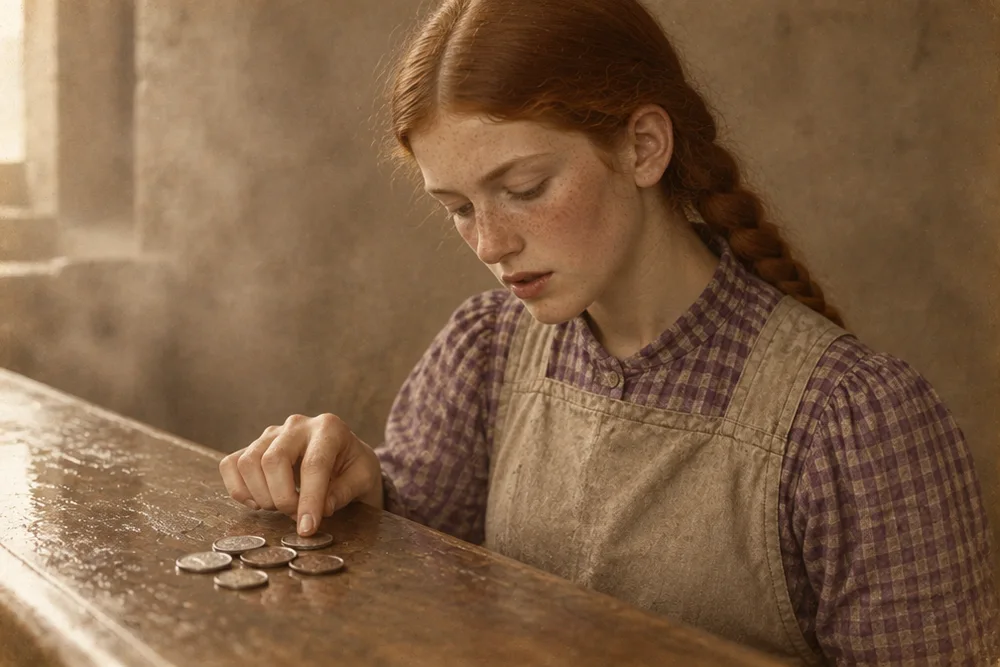
Bess collected after her. She did not argue. She counted the coins twice, lips moving, then laid one aside and tucked the rest into her apron pocket. Elspeth knew the rent at the rooming house where Bess slept, and knew the pawnshop on the steep lane had her name already. Still, the younger woman looked at Elspeth as if some answer might be waiting in her face.
Keziah took her own money last. She closed her fingers around it without counting, then pushed the coins into the pocket of her black skirt. Her expression did not alter. She could have made the room hear what she thought of the deduction, but she only turned toward the tubs.
“There are more orders tomorrow,” Jory said. “If we keep the customers, there will be wages.” He closed the ledger, taking care not to crease the page. “If we don’t, there won’t.”
Elspeth collected the coins. They were cold from the counter. She placed them in the small purse inside her apron and felt the purse’s thinness through the cloth. In her mind she separated them at once: rent, bread, coal for the room. The missing money left no part of the calculation untouched. It took the key farther away by inches.
They began the afternoon’s sorting with the returned sheets laid apart from the clean work. The oil had soaked through one fold and printed a dark patch on the cloth beneath. Elspeth turned the damaged pieces over, looking for a way to salvage them. There was none. A customer who paid for white linen did not want a gray shadow where a sleeper’s shoulder had lain.