What the Ledger Left Blank
Page 293 of 301
Chapters
Keziah asked her to check the water before they lifted the first pieces in. Elspeth dipped her fingers, judged the heat, and added a little cold. Bess measured the soap. They had agreed on the quantity for each load, and she did not add more because the cloth looked tired. The old laundry had taught her how a person could mistake a shine for cleanliness and use extra soap to satisfy a customer who had never seen the labor behind it.
As they worked, Elspeth kept her hands in the water and her attention on the rhythm. Lift, turn, press, rinse. The wet cloth grew heavy; the copper’s warmth crept into her wrists. There was no need to describe what she had brought. No one asked why she had chosen these pieces or whether she might have managed without the wash. Bess spoke about the next route. Keziah told Tom not to leave the cap where it could fall in the drain.
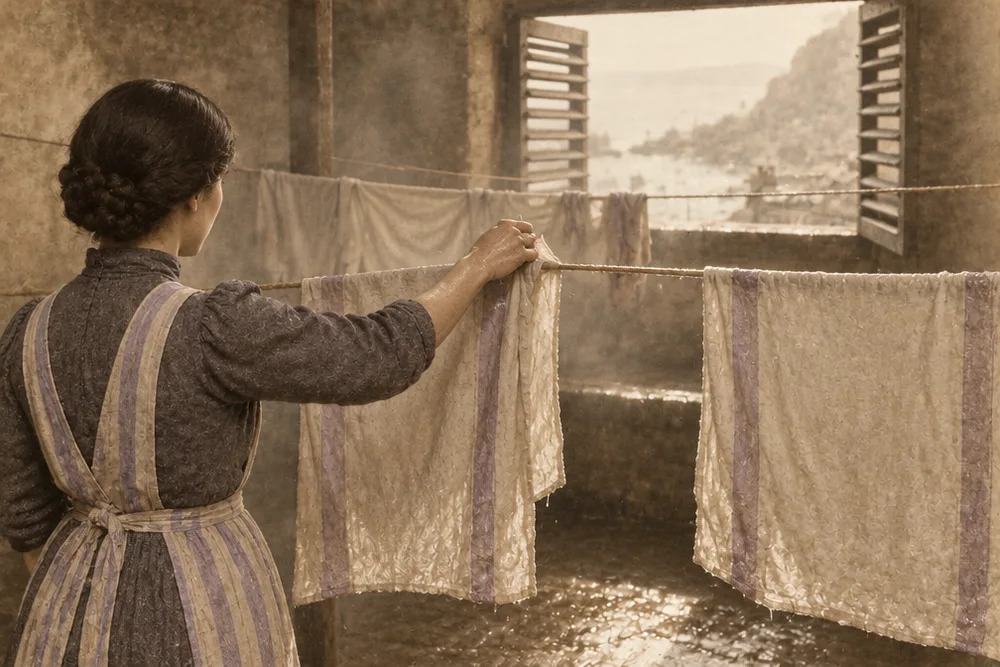
When the last rinse ran clear, Elspeth carried the basket to the lines. She had paid for her room. She had worked her shift. The cost of this wash had been counted in coal, soap, and time; her name was not entered beside it. She felt the oddness of that, not as shame now, but as a space she could inhabit without being called to account for her need.
The ledger rested on the table, open to the supported-turn page. Elspeth took up the pencil and wrote the cost: fuel, soap, the portion of the evening’s labor. She checked the figures with Bess, then drew a small dash through the claimant column. No initials. No false name. No explanation.
There had been a time when leaving that space blank would have seemed like another kind of hiding. Now the costs stood on the page where anyone could see them. The person was free to keep her own counsel. Elspeth put down the pencil and went back to the lines.
Her wash took longer to dry than the paid aprons. The winter air was damp, and the scullery’s borrowed lines sagged under the weight of the cloth. Elspeth shifted the pieces twice, giving each enough space to catch the faint movement from the open vent. She did not hurry them by bringing them too close to the brazier. They had no stove in the scullery, only the copper and a guarded iron brazier for warmth, and haste could leave smoke in the cloth.