What the Ledger Left Blank
Page 290 of 301
Chapters
Keziah came in behind them, shaking sleet from her black shawl. She planted her heels on the wet flags and examined the slate, her orchid kerchief dark at the throat. “No guesses,” she said. “Count what’s here. Then count it again.”
Elspeth opened the ledger to the page marked DECEMBER. The first winter reckoning had arrived.
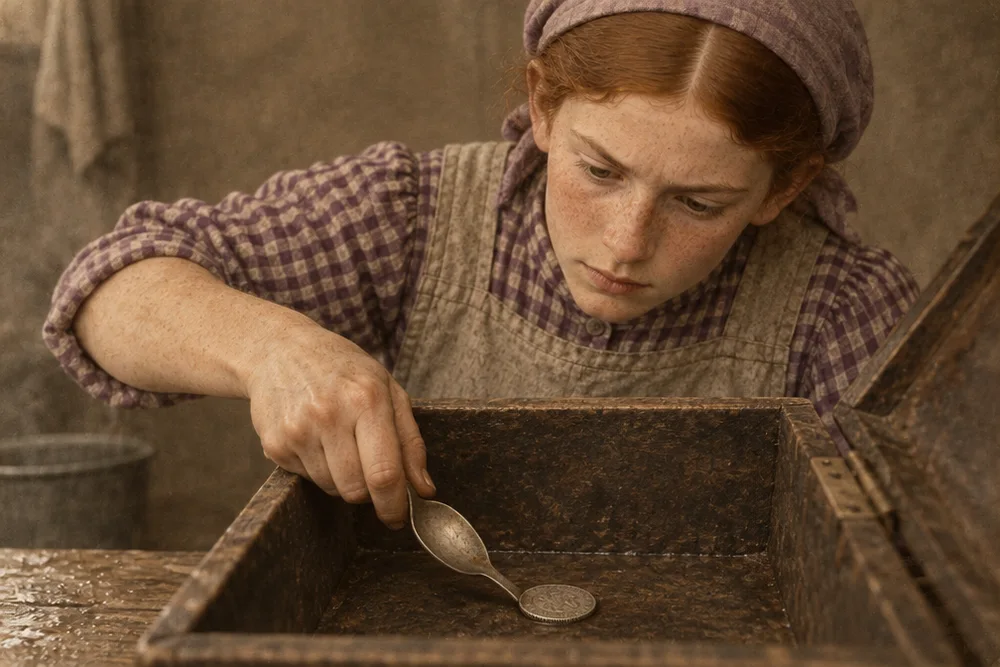
They set the slate on the long scullery table and brought the cash box out from beneath it. Elspeth counted the coins into stacks by denomination while Bess read each entry from the order book. Keziah checked the figures against the receipts, her thick fingers moving slowly but sure. A half-crown stuck to the bottom of the box where a drop of syrup had dried; Bess pried it loose with the blunt end of a spoon.
The month’s work had come in unevenly. The lodging-house order that had once filled two tubs a week was gone, but the stallholders’ aprons had proved steady, and Tom’s grouped route brought bundles from three nearby streets without wasting half a day on distant doors. The short round paid him enough to keep his cap and boots in repair. It also brought the washing close enough that no one had to promise a delivery the shop could not manage.
They counted the coal money first. Keziah kept it in a separate envelope, folded twice and marked with a black K. Next came soap, rent for the scullery’s evening use, and Tom’s route pay. Elspeth entered each sum in the book in the same plain hand she had once used to list a mistress’s linen. But here the columns were not built to hide a cost under a household’s general account. Coal was coal. Labor was labor. If one amount changed, the page showed it.
“The week’s wages,” Bess said.
Elspeth laid out the money. Bess took her share and counted it before sliding it into her purse. The others followed: the women who had wrung, lifted, scrubbed, mended, carried, and dried. No one asked to be paid last. No one received a promise instead of coins. Keziah watched each woman put the money away, her square face set in the severity she used when she was trying not to look relieved.
At the end of the count, a small pile remained. It was not profit to be spent at once. The agreed reserve for rain and failed drying had to be set aside, then the cost of fuel and the rent for the next week. Elspeth wrote the remaining balance in the final column. She checked it against the coins and the chalk marks, then checked it a second time.