What the Ledger Left Blank
Page 279 of 301
Chapters
The cooper’s stair smelled of oak shavings, wet rope, and the sharp sourness of old beer from the public house at the corner. Elspeth climbed it in the morning, one hand on the rail, the purse tucked inside her bodice. The cooper’s shop was open below; through its door she saw a barrel on trestles and a boy sweeping curls of wood into a heap. On the landing below the attic, a brass bell hung by Mrs. Prowse’s door. She pulled its cord and heard the thin jangle travel down through the floor.
The landlady, Mrs. Prowse, opened the door with a measure of flour on her sleeve. She was a square, neat woman who had let Elspeth try the room one night the previous autumn and remembered her now without needing to be reminded. ‘Still vacant,’ she said. ‘Though I have had two inquiries.’
‘I can pay the deposit today.’ Elspeth took out the purse. She said it plainly, before she could give herself time to soften the claim into a question. Mrs. Prowse named the amount: one week’s rent in advance and a month for security. Elspeth counted the coins into her hand. The landlady’s thumb moved over each one, stopping at the halfpenny. When she had finished, she nodded and brought a receipt book from the mantel.
They went up together. The room was just as Elspeth remembered: washstand with a cracked basin, bedstead, chair, and a patch of plaster the shape of a map above the hearth. The hearth was clean and cold. A narrow cupboard stood under the eaves. Mrs. Prowse lifted its latch to show the empty space and told her that the cooper would not object to a lodger so long as she kept the passage clear. Elspeth looked at the window, the door, the bed, each thing ordinary and unpromised until she had paid.
Mrs. Prowse wrote ‘Elspeth Curnow’ in a round hand and blotted it. Elspeth watched the ink dry. Her name, which had so often been entered beneath someone else’s household, now occupied a line for a room of her own. She asked when she might bring her trunk. ‘Whenever you please,’ Mrs. Prowse said. ‘The key is yours.’
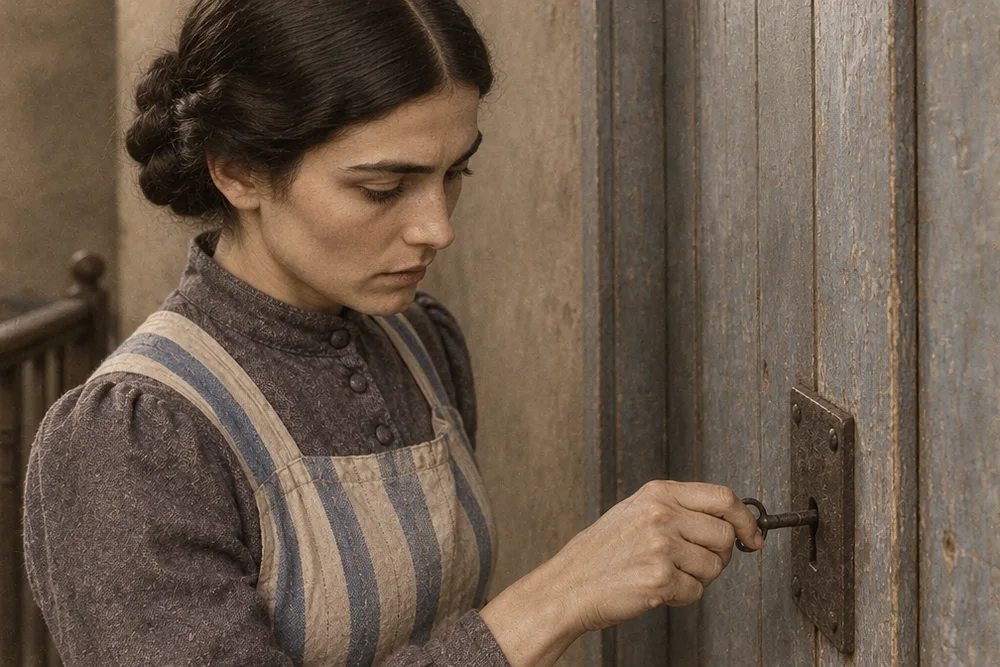
The small iron key was cool against Elspeth’s palm. She turned it once in the lock, opened the door, then closed it again. The sound was no louder than a cough, yet she stood a moment with her hand on the knob, listening to the room hold its silence. Downstairs, a cooper’s mallet struck wood in a measured rhythm.