What the Ledger Left Blank
Page 273 of 301
Chapters
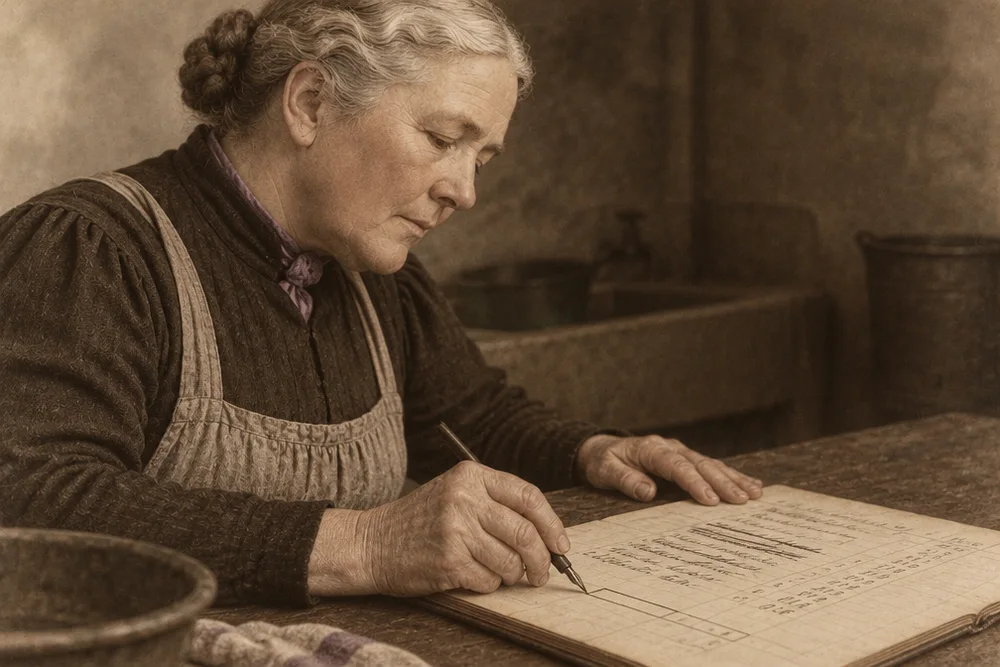
They spent the afternoon counting what the rain had done. The lost order came first. They entered the full refund in the ledger, then recorded the costs of work already done beneath it. Bess counted the hours she had spent setting the lines and carrying the pieces. Elspeth counted coal, soap, and the rent for the loft. Keziah added the cost of the extra journey to the delivery route, though Tom had already made it clear he would not carry a heavy basket for nothing.
The figures did not frighten her. She had lived too long among women who were told money was beyond their understanding. What frightened her was a tidy account that left out the thing that hurt. A rainstorm could turn a day’s profit into a loss without anyone’s fault; a low rate could make the same loss certain. She drew a line beneath the week’s totals.
“We’ve enough if the other orders come in,” Elspeth said.
“Enough for rent and pay,” Bess answered. “Not enough for the next bad spell.”
“Then we need a reserve,” Keziah said.
Bess tapped the delivery book with one blunt finger. “Before surplus.”
Keziah glanced up. “You’ll have your wages first.”
“I mean the reserve has to come out before anyone starts talking about surplus. Otherwise it’ll be whatever’s left after someone decides the money is already spent.”
The thought was plain, but Keziah had not put it into words. When the shop first began, every coin had seemed to have another claim upon it: soap, a broken handle, a late customer, a woman short of rent. She had treated what remained as something to be decided in the moment. The moment had always come with a hand out.
“A drying reserve,” she said. “Held aside for weather, paid into the account before we divide any surplus.”
“How much?” Elspeth asked.
They worked it out from the cost of an extra night in the loft, the fuel for another wash, and the wages for the hands required to finish it. Bess insisted they count the rental even when they could use the lines at the scullery. “The weather doesn’t care which room we’re in,” she said.
The figure they reached was not large. It was not nothing, either. Keziah wrote it on the page, then drew a narrow box around it. Their money would have a place to wait before anyone could decide it belonged elsewhere.