What the Ledger Left Blank
Page 232 of 301
Chapters
At the foot of the page Elspeth wrote: Room, Friday night. Keziah made her add: paid in advance from orders. Then she closed the cover and held out her hand.
“The key stays with us?” Elspeth asked.
“The key stays with the work.”
“That is not the same thing.”
“No,” said Keziah. “But it is the beginning.”
On the first Friday, Keziah reached the scullery just before nine. The last market woman was rinsing her knife at the copper and looked over her shoulder at the blue-threaded key in Keziah’s hand.
“You’re the laundry lot,” she said.
“We are.”
“You’ll have to wait until I’m done.”
“We will.”
The woman scrubbed the knife and wiped the board, taking her time without spite. Keziah stood with her basket and waited. Bess arrived at the lane with the soap wrapped in brown paper, and Elspeth brought the order book. Tom had the morning route marked and ready, but he stayed outside until the room was theirs.
When the market woman finished, Keziah helped her drain the last of the water. She did not hurry her away. The copper belonged to the market first; the agreement did not make the other women’s work less important. Only when the keeper had checked the floor and nodded did Keziah put the key in the lock and open the door.
They began with the aprons. There were twelve, exactly as promised. Bess checked each bundle against the slate; Elspeth marked the count in the book. Keziah fed the fire while Tom laid out the covered baskets and went to fetch the first load from the stallholders. The scullery filled with steam, then cleared through the cracked window. The work went at a pace that left no one scrambling to catch up.
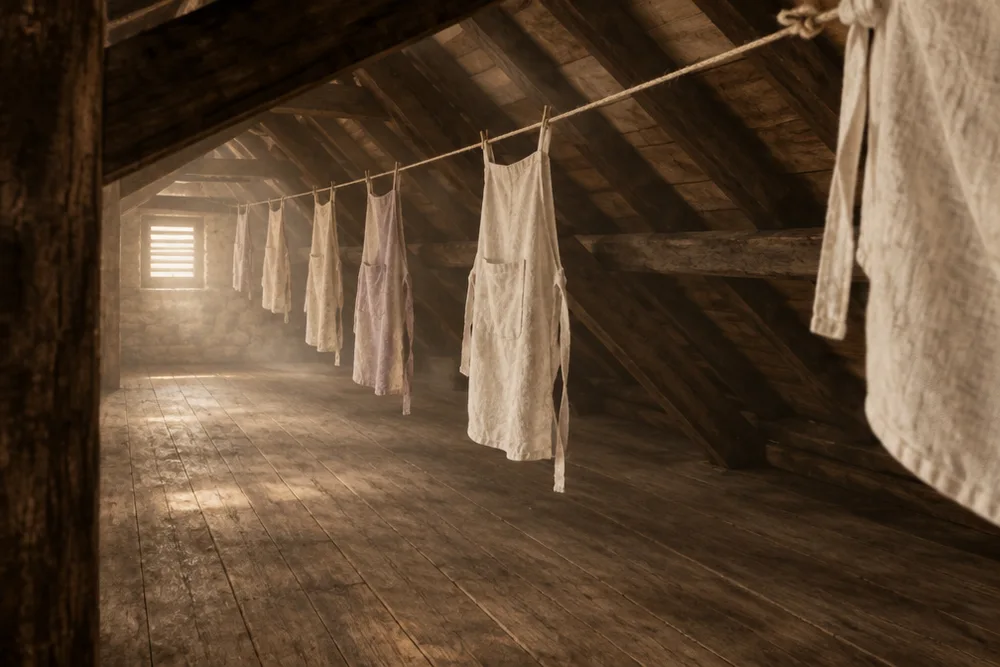
Before midnight the aprons were washed and rinsed. They hung in the loft, spaced along the lines. The floor was swept; the copper was emptied; the key was checked back into its place on the table. Keziah’s hand ached, but she could flex it. Bess’s sleeves were wet to the elbows, yet she had not been asked to stay after the work was done.
“We could have taken another four,” Bess said as she counted the payment.
“We could have,” Keziah replied.
“There would have been more money.”
“There would have been more work. We don’t know yet whether there would have been profit.”
Bess considered the distinction, then entered the payment. “Next week, we count again.”