What the Ledger Left Blank
Page 153 of 301
Chapters
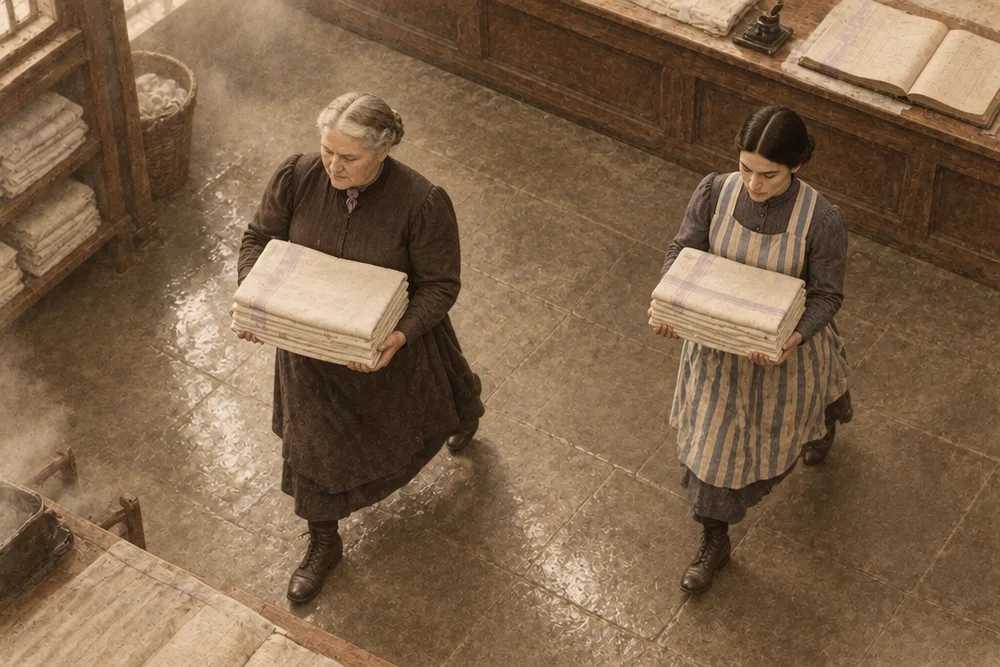
The workers went out in twos and threes. Bess pulled her canvas apron loose and folded it into a square, carrying it under her arm. Keziah stayed to stack the pressed linen. Elspeth remained too, though Jory had not told her to. She wanted to ask whether he meant to dismiss her in the morning. She wanted to know whether he would dock the wages for the parcels, whether the empty alcove had made a difference to the ledgers he feared. She asked none of it.
When Jory went into the office, she took a brush and began sweeping the alcove. There was lint along the skirting board and a thin scattering of ash, though the stove had been cold for weeks. The brush moved over the old brick, catching on a crack near the rear leg. She bent and pulled free a single pale thread snagged there.
It might have come from any cloth. Still, she held it between finger and thumb a moment longer than necessary, thinking of the blanket’s blue binding folded beneath her own hands at home. Its stitched edge had carried a memory she had thought gone: Merren’s bent head in the cottage, a scrap of blue wool passed through the needle, the rough warmth over Elspeth’s knees when coal had run low. She had believed taking the blanket home meant she had carried that memory out of need and into the past. The empty alcove had shown her how little separates the two.
She let the thread fall into the dustpan.
Keziah set the last clean parcel on the shelf. “You need not wait for him to tell you what you already know.”
“I know he may let me go.”
“He may.”
Elspeth looked at the broad hands that had wrung shirts for decades. One knuckle on Keziah’s right hand was swollen, the skin taut over it. “What will you do?”
“Come in tomorrow.”
It was not advice. It was the answer Keziah had made for herself. Elspeth nodded once, and together they carried the folded linen to the front counter. The ledger lay open beside the inkpot, names and amounts fitted into their ruled columns. The pages had no place for a parcel returned, a claim withheld, or a woman who had come to stand beside her daughter without asking to be thanked.