The Weight of Blank Paper
Page 211 of 246
Chapters
The paper was thin enough that the board’s grain showed through. Its blank space was not a missing signature or a concealed count. It was a place where the next person could write what they needed, in their own hand.
Pella capped the pencil and went inside to ask for a list of names.
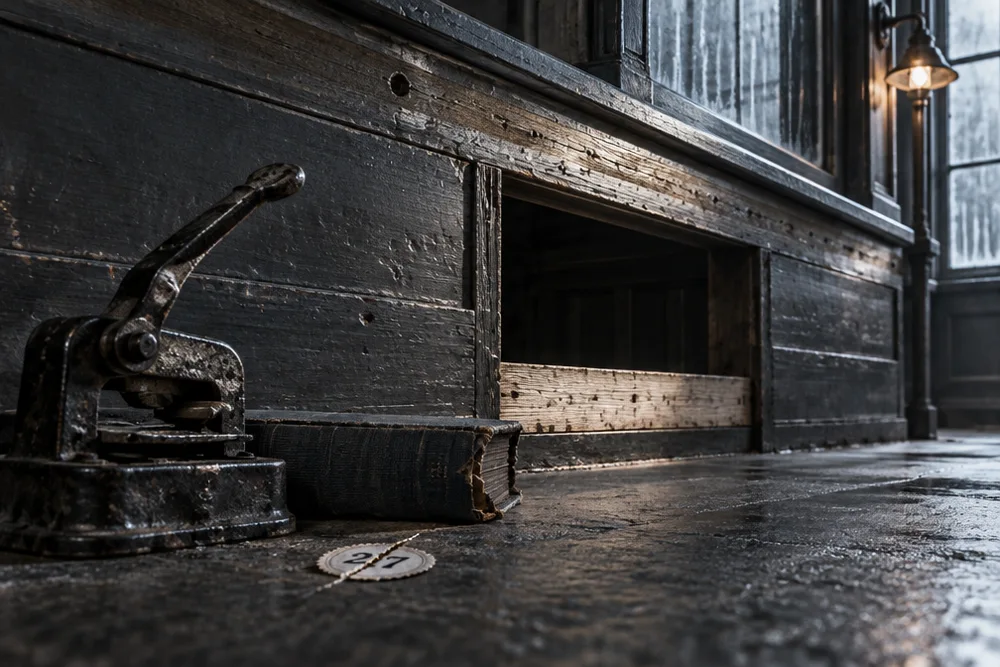
The terminal was quieter now. The stripped counter stood against the wall, its brass rail gone; the staff hatch remained, square and dark beneath the tally window. Pella paused beside it. She could still picture the old punch in the district’s evidence room, its crooked lever and jammed catch tray. It had brought her to the island with the idea of keeping one object from her mother’s work. It had also made the work impossible to keep separate from its consequences.
She had not brought the punch home. She had not taken the ledger away from the district. The tools were held where they could be examined, and the account belonged to Maren. Pella was beginning to understand that holding something close did not always protect it; sometimes it only kept everyone else from seeing what it was.
The ferry schedule for the next morning had been updated. Pella checked the departure time and sent the shop owner another message: she would arrive by midday, unless the crossing changed. Then she asked the berth attendant for the names of passengers who had missed mainland appointments during the first week without regular service.
“You’re making a list?” the attendant asked.
“A list of what the three mornings don’t cover.”
“That’ll be a long one.”
“Then we’ll know what we’re asking for.”
The attendant pulled a pad from a drawer and began to write. Pella stood beside him, not taking the pencil from his hand.
Outside, Maren’s figure had disappeared up the hill. The noticeboard showed the district account, the limited schedule, and the pencilled complaints. No one had pulled the pages down. At the bottom of the new question, the first answer appeared in a cramped hand: night unloading, Tuesdays and Fridays.
Pella read it once, then stepped back to make room for the next person. The day had ended with no reconciliation spoken aloud, no clean solution to the harbor’s bills, no guarantee that the new service would last. But Maren had written her own account, and Pella had not tried to write it for her.