The Weight of Blank Paper
Chapter 11 · The Spare Seal Stub
Page 129 of 246
Chapters
The district launch came in under a low ceiling of cloud, its engine knocking as it crossed the harbor mouth. Kester watched from the Crescent Terminal tally window while Devra Sile stepped off with her flat document case held close against her raincoat. The launch’s wake slapped the stone below the tide stair. Behind Devra, the terminal stood half emptied: auction tags hung from the counter fittings, and the old hatch had been locked with a new padlock that looked too bright for the door.
Kester went down to meet her. He had dressed carefully, though his knitted vest sat crooked beneath his coat and his loose brass key kept catching the wool. He was conscious of how his body leaned forward as he descended. At the bottom, Devra offered no greeting beyond his name and a request to see the records. Her stride was deliberate; his was not. They climbed back to the ticket hall together.
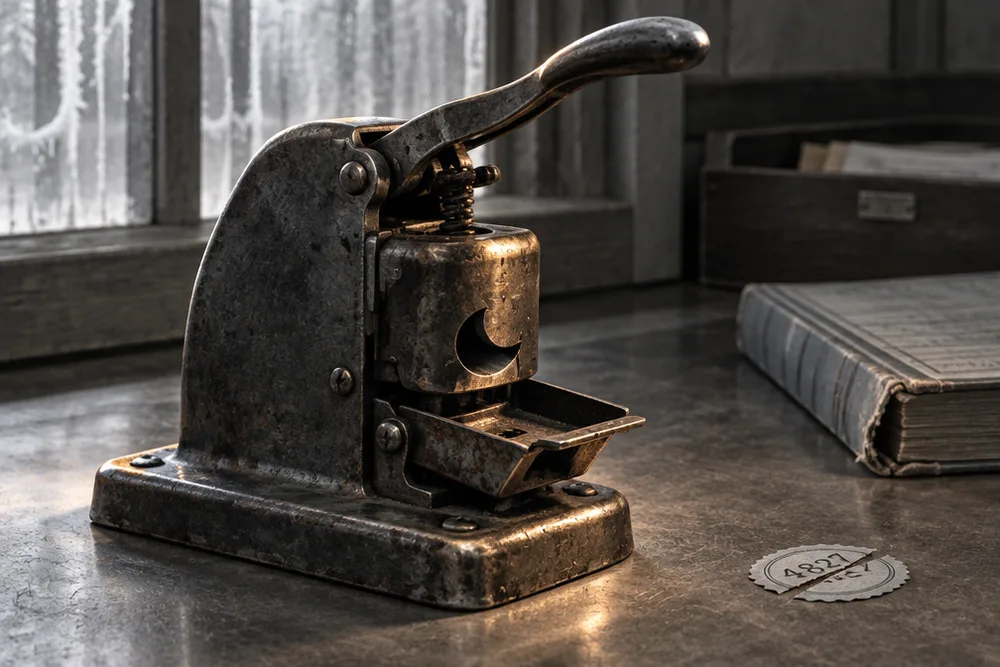
“The ledger and the punch are here,” Pella said. She stood by the counter in her waxed square jacket, canvas tool roll at her feet. Maren was not with her. The cloth-spined ledger lay on a clean patch of counter, its broken lower corner turned away from the damp window. Beside it sat the palm-sized iron punch, lever crooked, catch tray still attached. Pella had wrapped the tray in paper to keep the loose clipping from shifting.
Devra set her case down and checked the room before she touched anything. Tavia Grenthall waited by the staff hatch, pencil clipped across her oversized sweater, braid folded at her collar. She had brought a small poll kit, its canvas flap tied shut. Orrin Venn had been asked to attend the inventory and had not come. No one mentioned that until Devra asked whether he had been notified.
“He knows,” Tavia said. “He said he had work at the icehouse.”
“Then he can answer later,” Devra replied. “For now, we record what is present.”
Devra read each item into a small recorder, then had Pella and Tavia confirm the condition of the wrapping and the ledger’s cover. Kester stayed back until she asked him to identify the punch. He leaned over it, elbows wide, and recognized the scrape on the lever, the dull iron, the little notch where his thumb had once rested when he worked the old ticket window.
“That’s the one,” he said. “Retired eight months before the referendum. The spring failed. It could still cut if somebody held the lever down and lifted it back by hand.”