The Weight of Blank Paper
Page 138 of 246
Chapters
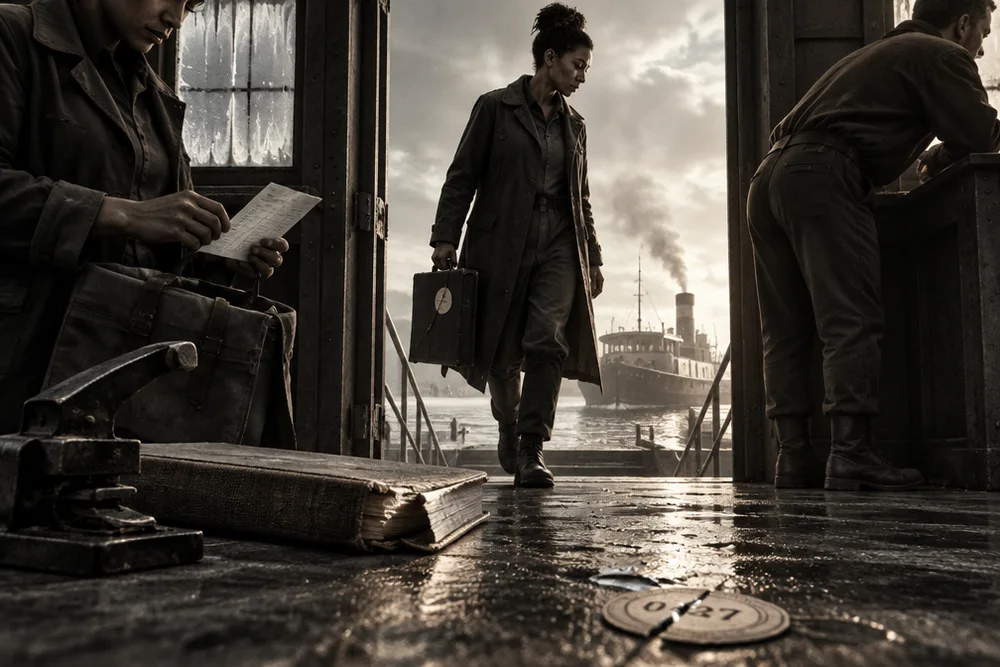
Kester did not ask what Orrin might say. He could imagine it too easily: the harbor in debt, the sale as rescue, a repair made under pressure. He understood the arithmetic of those arguments. He had heard the icehouse tenants describe their balances and knew a stay could leave bills unpaid. But arithmetic could not turn an unchecked number into an inspected seal.
Devra packed the sleeves into her case. She left the punch on the inventory sheet, still visible, and took the ledger and stub under seal. Pella watched the case close. Her mother’s initials had left the room in Devra’s possession; the daughter had not followed them with a demand for explanation.
“You did what you needed to do,” Kester said.
Pella’s expression hardened. “That’s not the same as doing it well.”
“No,” he said. “It isn’t.”
The launch horn sounded from the slip. Devra checked the latch on her case, then gave Pella the inventory receipt. Pella read it, folded it once, and put it into her tool roll. Kester stood near the terminal door, bent at the hips, his elbows angled out as if he were still bracing against the counter.
“I’ll need you in the Sill Room when the packet is opened,” Devra said to him. “You can identify the certificate and answer for your own actions. You are not being asked to certify the contents.”
“Understood.”
“And if you remember something relevant, report it before then. Don’t wait for a question that may not be asked.”
Kester nodded. “I will.”
Devra went down toward the launch with the case in her left hand. The cold light from the slip cut around her raincoat as she descended. Pella remained in the hall. Kester stayed with her, and neither of them moved until the engine started.
“When did you realize the certificate was wrong?” Pella asked.
“When you first showed me the seal notice, I knew I hadn’t inspected the number myself. I told myself that was a difference without consequence.” He glanced at his hands. “After the stub matched the ledger, I couldn’t keep pretending it was just a difference.”
“That’s not the same as knowing what happened.”
“No.”
She looked toward the hatch, where the new padlock hung bright against old paint. “You could have said that at the start.”
“I could have.”
The answer did not repair anything between them. Kester had no wish to cover it with an explanation. For years, he had been treated as a reliable man because he remembered schedules and boat names, because he did not raise his voice, because people trusted the neatness of his signature. Now he saw how easily a reputation could fill a gap in a record and make the gap invisible.