The Night the Floor Plan Wept
Page 54 of 232
Chapters
The woman studied her. “Will that help?”
“I don’t know.”
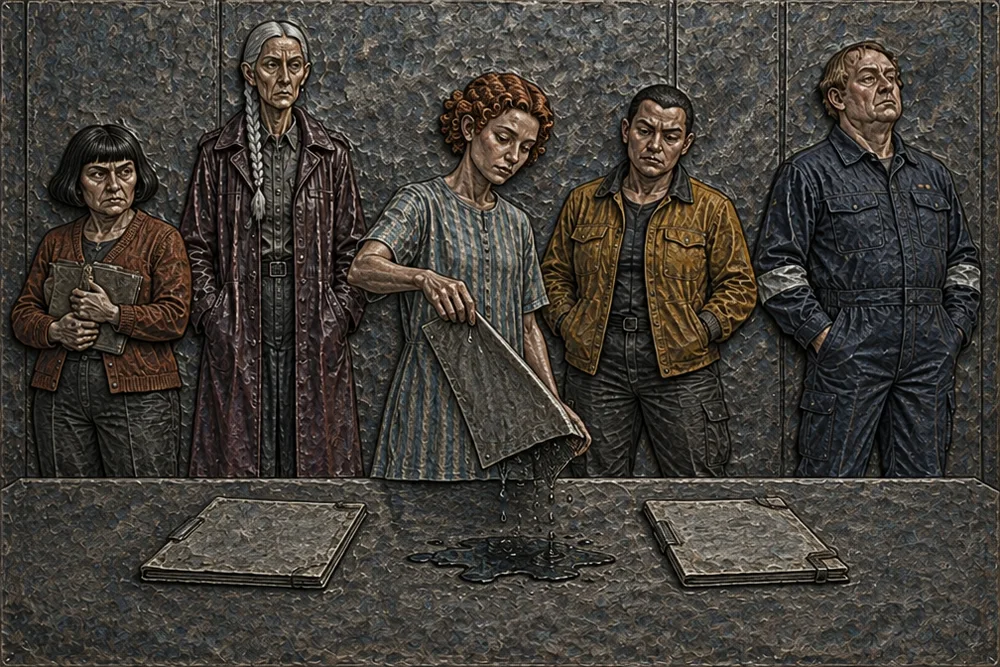
Celia picked up the sheet by its top edge and lifted it from the table. The dent eased down from the floor, following the paper’s movement for a handspan. The page bowed in her grip. She did not shake it, fold it, or tear it. She held it away from both reports, far enough that its shadow no longer fell across them.
The pressure under the floor faded. The two drops of water remained where they had fallen. The pale paper relaxed in Celia’s hands.
“That’s all?” the woman asked.
“That’s all I can show you.”
Celia set the note on the far end of the table, beneath the lamp, away from the reports. She checked the two originals again, looking for a new stain or dent. Report A’s staple remained in place. Report B’s water ring had not spread. The attachments lay unaltered. They were not safe; nothing in Briar Reach seemed safe. But they had not been changed by her hand or the wall.
She pulled a pair of archival envelopes from the inventory crate. One was marked for transport records, the other for incident reports. Neither was appropriate. Putting report A in the transport envelope and report B in the incident envelope might seem orderly; it might also let the existing classifications separate them beyond recovery. She set the envelopes aside.
The safest temporary arrangement was plain and visible: the two reports laid flat, each with its own attachments, side by side but not joined, the note between them and clearly separate. Celia placed an empty document tray underneath each original so that an accidental smear could not transfer from one to the other. She kept the lids off.
The wall dent reached the base of the east doorway and stopped. It held there, half within the plaster and half in the shadow cast by the frame. The woman in the nearest bed watched it, her face turned toward the threshold. No one spoke. The building’s quiet did not feel like peace; it felt like a pause in a procedure that had not finished.
Celia stood with the clean envelopes in her hands. They were pale, stiff, and thick enough to protect the papers from handling. A label on one read “TRANSFER,” the other “INCIDENT.” If she put the originals into different envelopes, she would be making a choice about which report belonged where. There was no evidence that either classification was false, but the act would place them on separate paths in the inventory. Tonight, separation was not the same as deciding which one was right. It could still be a way to lose one.