The Night the Floor Plan Wept
Page 29 of 232
Chapters
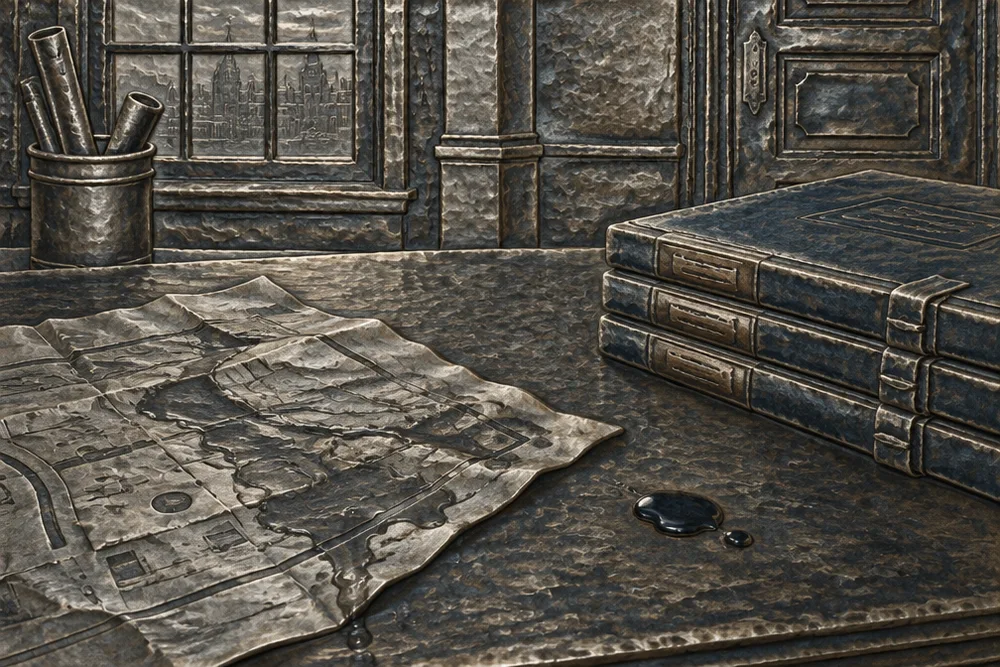
Celia snatched up the comparison sheet before the droplet could reach its paper edge. The water rolled across the plastic and fell onto the desk, where it spread into a dark coin-sized patch. She set the sheet down on a dry blotter. The linen plan continued to bead, the wet outline bright as a wire laid into the cloth.
She looked for a leak overhead. The ceiling tiles were pale and dry. A pipe crossed the alcove ceiling but not the records room. There was no stain in the plaster, no damp patch on the wall, no reason for water to gather exactly around a room that had vanished from the hospital’s current plans. She touched the linen again, lightly. A droplet clung to the pad of her finger, cold and clear.
The desk clock showed 12:01. Celia fetched a blotter and held it beside the plan, but she did not press it down. The first time the room’s outline had appeared wet, she had told herself the linen might have been stored in a damp jacket. This time the water emerged before her eyes. She could record that observation, but recording it would not explain it.
Behind her, the corridor door remained shut. No footsteps, no voice. The building’s old ventilation system clicked on and stirred the paper corners. Celia slid the two reports farther from the wet plan, preserving the separate sleeves and their supporting documents. Her hands trembled once, then steadied when she gripped the desk’s metal edge. At least the originals were safe. That was the part she could control.
The room’s outline continued to shine. Water traced the wedge between west ramp and east stair, collecting at the lower point before spilling over the linen’s edge in a slow, irregular drip. Celia laid a blotter under that corner. The blotter darkened where the water touched it. The plan remained wet.
She wrote the time on her inventory notes: 00:02. Under it she recorded, “Moisture observed along Room 17 boundary on linen plan. No visible overhead source. Originals A and B dry and separated.” She hesitated, then added: “Do not infer cause.” The words looked small against the white page. Her handwriting was neat because she was concentrating on every stroke.