The Night the Floor Plan Wept
Page 217 of 232
Chapters
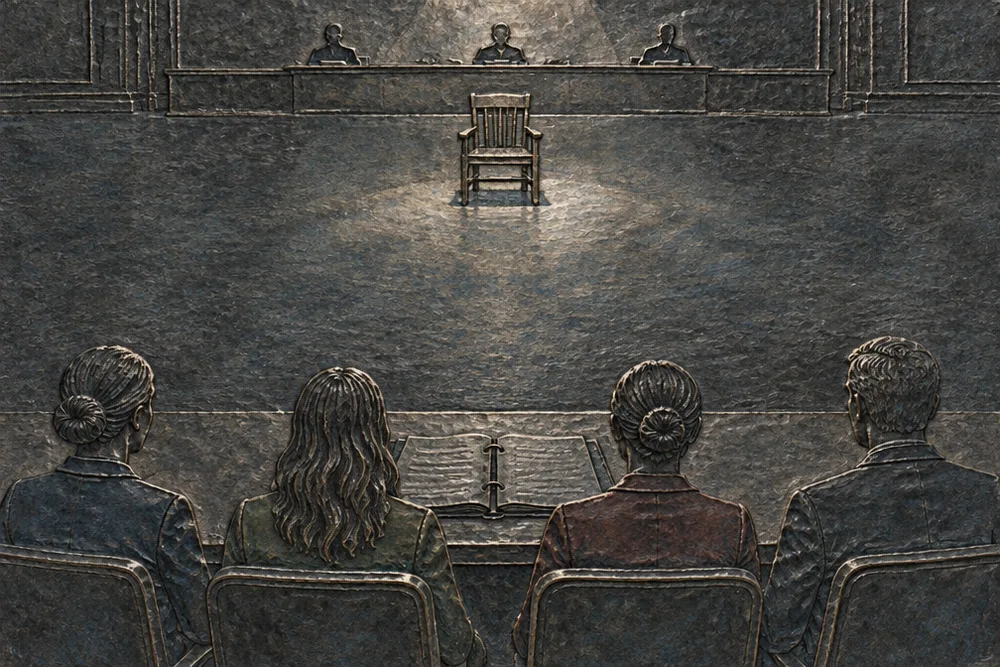
The public hearing began at ten on the scheduled day in the county annex. Celia arrived with Nell, Ada, and Martin, but the originals stayed in secure custody. The chair had the accession file, the two descriptions, the hold notice, the contractor’s acknowledgment, and the migration log. A privacy officer sat beside her to answer questions about protected patient information.
The room was plain: a long table, a wall clock, a pitcher of water, and a narrow window looking onto the wet street. There were no hospital plans on the walls. The chair explained that the hearing concerned custody, access, disposal, and the county’s handling of the linked records. It would not determine whether the six patients had left Briar Reach or remained inside.
She asked each participant to state a name and role. Celia identified herself as the submitting custodian and municipal records clerk. Nell identified herself as the complainant and as a witness to what she heard. Ada identified herself as the source of both dispatch reports. Martin identified himself as the officer who had signed the earlier disposal release and later withdrawn it.
The chair confirmed that one accession had been issued and that the two reports remained separately described beneath it. The complaint and Nell’s account were linked as supporting material, with the account marked unverified. The privacy officer explained that public access to the reports would not automatically disclose patient charts or other protected details.
Celia watched the chair turn one page at a time. No one had been asked to choose a report, and no document had been renamed to make the conflict disappear. The hearing was in session; the clock’s second hand moved evenly above the table. When the chair invited Celia to explain the migration history, she placed the printed log before her and began with the field she had removed.