The Night the Floor Plan Wept
Page 10 of 232
Chapters
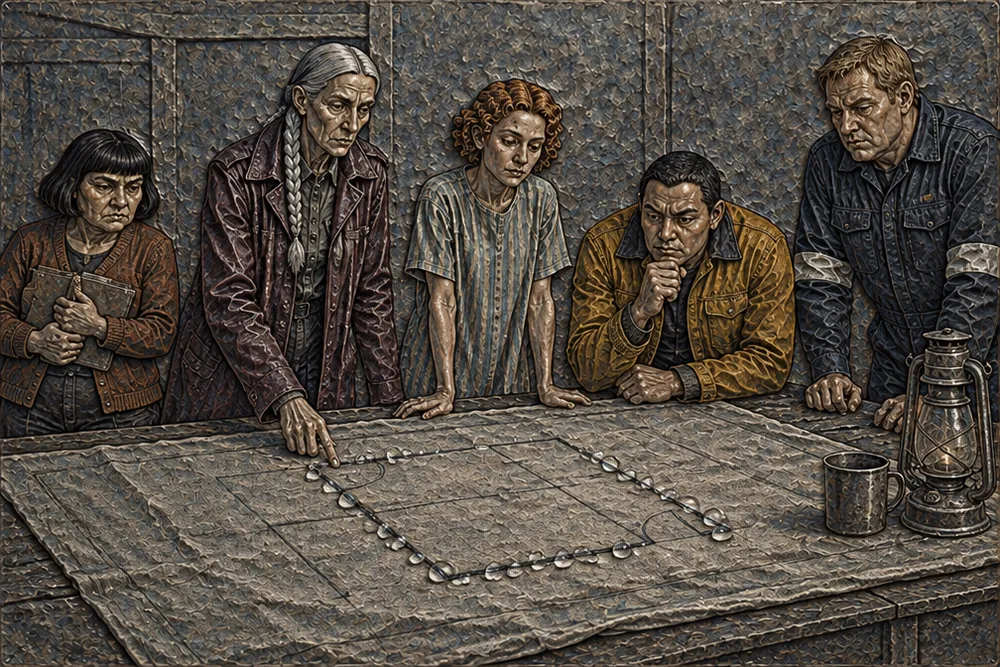
They spent the next hour sorting by date and series. Celia used archival weights to keep the linen from curling and made a space for it on the table between two stacks of forms. Ada stood with her hands behind her back, pointing out faded labels without taking anything from Celia’s hands. She was careful about custody in a way that suggested she had spent years watching it become an excuse.
The hospital’s old catalog had been maintained in parallel systems: index cards, a typed ledger, and a database migrated twice. Each system had inherited omissions from the one before. The card for Room 16 listed a washbasin and two beds. The card for Room 18 described a supply closet. Nothing between them. Celia wrote the gap into her notes rather than filling it with an assumption.
At eleven, the security lights outside the room clicked off and on again. Ada looked up. The fluorescent tubes continued their steady glare, but the hall beyond the wired glass had turned dark. Celia could see her own reflection in it: black blunt hair, rust cardigan, shoulders angled toward the table. Behind her reflection the corridor seemed longer than it had a minute earlier.
“Motion sensor,” Celia said.
“Probably.” Ada’s eyes stayed on the glass.
Celia checked her phone. No signal. The building’s thick walls swallowed reception, and the hospital’s landline had been disconnected before the first disposal inventory. Martin had given her the dock keys and said the security panel would call him if anything tripped. She had not asked whether it had ever called him before.
Ada found a drawer of accession slips in the bottom of a steel cabinet. Their carbon copies had stuck together. She separated them carefully and read the old headings aloud: origin, date received, material, condition, disposition. The last box had been stamped CLOSED in red ink. Celia saw Ada’s thumb brush the edge of the stamp and then fall away.
“Did you close a lot of files?” Celia asked.
“The department closed what it could.”
“That isn’t the same thing.”
“No.” Ada’s gaze moved to Celia’s notes. “It’s often made to look the same.”
Celia felt the comment land too near her own work. Three years earlier, while migrating municipal records, she had removed an obsolete location field to prevent duplicate entries. It had seemed like housekeeping: a column no one used, a link that led nowhere useful. She had not known that one complaint depended on it to remain attached to a patient chart. By the time she discovered the break, the original link had vanished. The family’s last address was gone from the system.