The Names Beneath the Soundings
Page 226 of 266
Chapters
Ysolda remained by the yard board. The notice about Bleddyn’s removal had begun to curl at the bottom where damp crept through the pinhole. She flattened it with her palm. Under it, the winter timetable showed a line of blank crossings, each one a promise the yard had not yet earned.
The authority’s examiner had said the next trial could proceed only with an insured crew, a repaired landing, and a signed schedule. They had none of those conditions complete. They had one less obstacle: the people asked to make the trial possible were no longer expected to do it for free.
Nia came back with a canvas tool roll under her arm. “When they call us, we’ll be here,” she said. “On the terms.”
“On the terms,” Ysolda said.
The rain eased by noon. Ysolda walked down to the slipway with the duplicate agreement folded in her jacket pocket. The ferry’s hull creaked against the fenders, and every few seconds the rising tide lifted it with a slow wooden groan. The exclusion marker tugged at its line beyond the pilings.
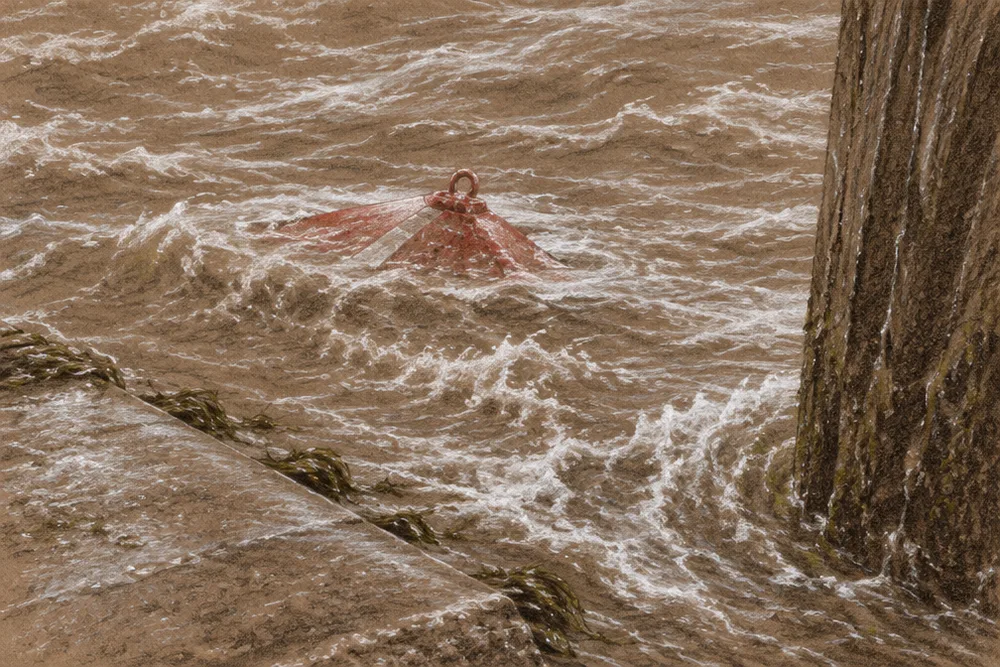
She checked the line from the quay, then checked it again from the lower step. The red marker remained visible, though the current pressed it almost flat. She made a note to ask for a heavier float before the next trial. At the edge of the slip, a strip of weed turned in the backwash, unwinding and knotting itself again.
Her phone rang. The board secretary said the payment order had been submitted. He did not say when the crew would see the money. Ysolda thanked him and asked him to email the confirmation to Nia as well as the board. He agreed, with a pause that sounded like a question he had chosen not to ask.
The yard’s small office stood behind her, its door propped open with a block of timber. Inside, the tide clock ticked. The schedule pinned to the wall still showed the canceled trial in red pencil. The blank space after it seemed larger than the dates around it.
Ysolda had spent weeks wanting the ferry to move again. She wanted her berth, her qualification, the clean proof of competence that would put her name on the winter roster. The want had not gone. It sat in her as insistently as the ache in her shoulders. But now she understood how easily the wish to get moving could be used to make someone else carry the risk without the right to stop.
She went back to the dispatch shed, where Nia was stacking the crew’s equipment list beside the signed terms. “I’ve emailed the order,” the secretary said from the phone. “They’ll confirm receipt.”