The Names Beneath the Soundings
Chapter 11 · The Winter List
Page 100 of 266
Chapters
By six in the evening the rumor had crossed the estuary twice and returned with a different coat on. The winter ferry would stop. The yard had lost its insurance. Ysolda Jerman had marked a hole on the chart where there was no hole. Each version arrived at the west-bank slipway in the mouth of someone carrying a bag, then went away with another person who had nowhere else to go.
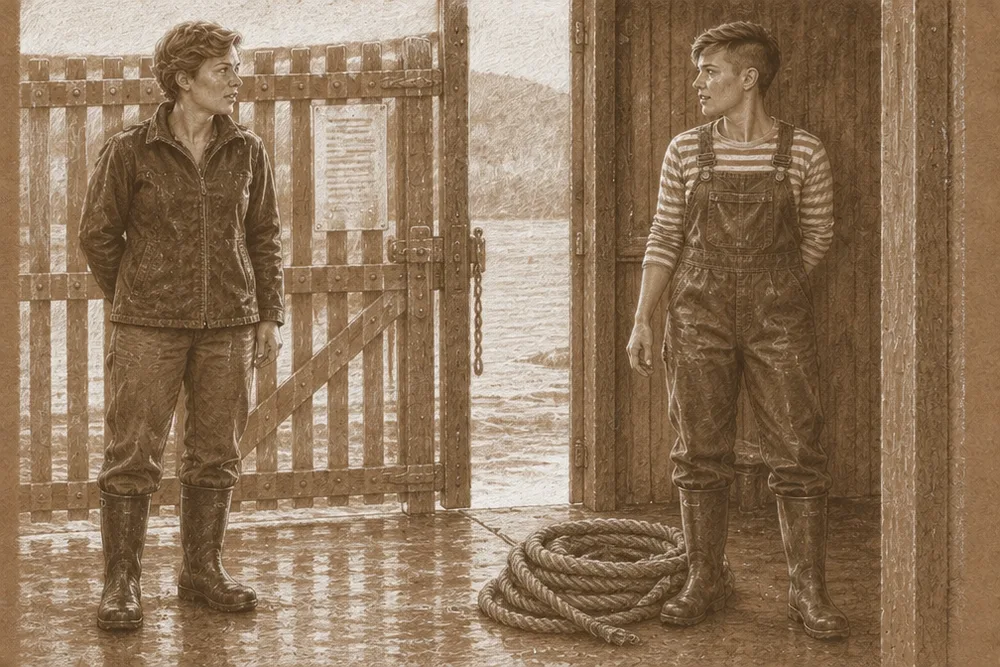
The last scheduled crossing had been cancelled after the authority’s notice went up. A strip of red tape fluttered on the gate, and the notice itself had softened at its corners in the river damp. Ysolda stood under the shed roof, short wax jacket dark with rain at the shoulders, and read it again while shift workers gathered with their collars raised. Across the gray water, the east-bank landing was a line of lamps beneath a steep, wet hill.
“They say it’s finished,” said a woman in a care-home tunic, holding a paper sack against her chest. “My sister’s car is on this side. I’ve got the early round tomorrow.”
“It isn’t finished,” Ysolda said. The words sounded more certain than she felt. “The yard has suspended crossings until the route is checked. That’s not the same thing.”
A man with a steel-toed boot split at the seam gave a short, humorless laugh. “It is if you’re waiting to get home.”
Nia Huws came from the workshop carrying a coil of towline over one shoulder. Her striped jersey showed beneath her bibs, and rain beaded on the shaved side of her head. She set the coil down, looked at the cluster, then at Ysolda. “We can get people across by road if we stop making one person solve it at a time.”
They found two cars willing to take passengers and a third whose driver would go only as far as the bus stop at the main road. The estuary road curled inland through low fields before it crossed the river by bridge; the drive took nearly an hour where the ferry took eight minutes. Ysolda borrowed a clipboard from the booking office and wrote down names, addresses, shift times, and who could carry whom. She put the care worker with a retired postman whose daughter lived near the east-bank village.
“Don’t put me down as a lift,” the care worker said. “I can drive. I just can’t leave my car here overnight.”
“Then you’re a driver,” Ysolda said, striking the first entry through. “And he can take the two from the packing shed.”
The postman studied her pencil marks. “You’re making a timetable.”
“I’m making a list so people don’t have to ask the same favor twice.”