The Names Beneath the Soundings
Page 214 of 266
Chapters
“This is the version in the town file?” he asked.
“The wording is the same. I compared them before I brought it out.”
“And what’s different?”
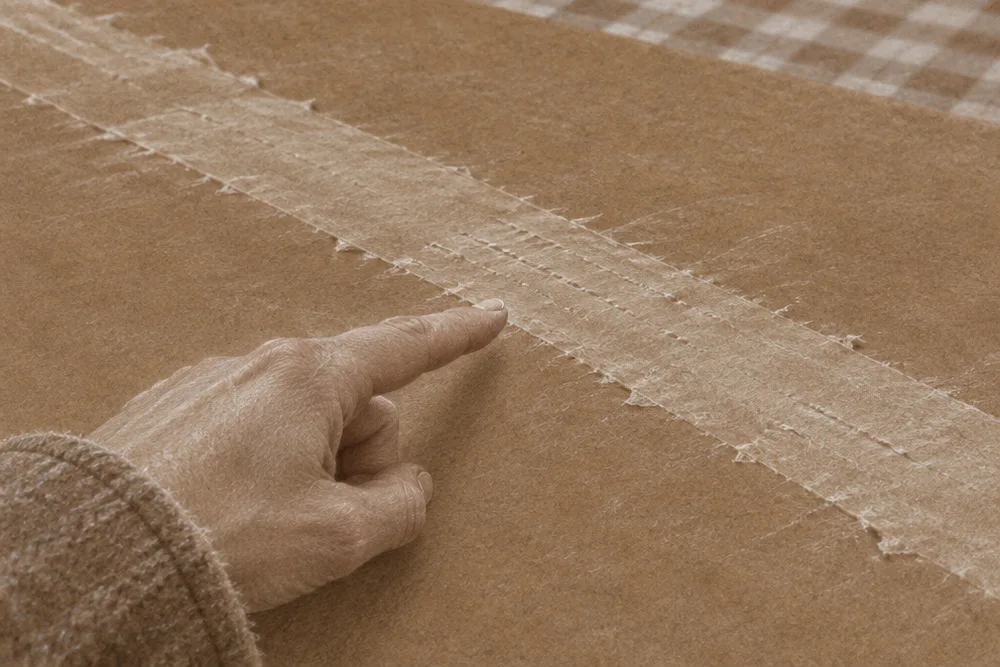
Mair turned the carbon to face him. In the left margin, beside the paragraph describing the launch’s approach, a rough, pale strip bore faint grooves where the words had been. “ROUTE AS ADVISED BY YARD,” Mair said. The words were not present in the issued finding. The next line began half a space too far to the left.
Parry opened his notebook. “You’re saying someone removed this reference after the carbon was made.”
“The carbon was made when the finding was typed. You can see the impression where the words were. And here.” She pointed to the faint grooves crossing the blank strip. “The type struck through onto the sheet below it. This is not a note I added later.”
He bent over the fibers, still careful not to touch. “Could the route reference have been removed before the finding was signed?”
“The carbon tells you it was there when the document was prepared. It doesn’t tell you who cut it out, or at what hour.”
“But you knew it had been removed.”
“I knew it was absent from the signed copy.”
“That isn’t quite the same thing.”
“No,” she said. “It isn’t.” She drew out the next sheet: a contemporaneous duplicate of her interview notes, its edge marked by the old rust-colored stain of a paper clip. The interview had been with an apprentice who survived the launch strike. Mair had written down his description of the training route, the turn at the buoy, and the launch’s return toward the yard. In the margin, her own handwriting said: Do not identify witness in public report. His name remained on a separate cover sheet, now missing.
“This is your handwriting?”
“Yes.”
“The margin has been preserved.”
“That promise has.” She set her forefinger beside the note without covering it. “The route reference has not.”
Parry turned his notebook toward himself. “The survivor’s identity isn’t needed for what I’m reviewing today.”
“It may be needed later.”
“I’m not asking for it.”
“Then we can continue.”
He asked her to describe the paper’s history. Mair answered in measured steps: she had made the carbon at the time of typing; the signed finding had been filed with the town record; the duplicate remained with her working papers. Afterward she had noticed the discrepancy. She could not say when the cut had been made, or whose hand had held the blade. She knew she had not made it. That was not proof of who had.