The Names Beneath the Soundings
Page 120 of 266
Chapters
When dawn came, the estuary showed itself in bands: iron grey beneath the bank, a thin whiteness near the far side, then the dark line of the opposite shore. The tide was still setting upriver. From the kitchen window, Mair could see the ferry’s mooring rope draw taut and slacken against the rise.
She put on her belted wool coat. Her neck resisted when she turned, but she forced it to follow her shoulders. At the table, she put her working statement in a flat brown envelope. Then she put it beside the marked carbon, the original interview notes, and the redaction sheet in the document case. She kept the witness’s identity covered. She left the route visible.
A car horn sounded once from the road. Not a demand, only a reminder that the day had started. Mair checked the latch on the document case and lifted it by the handle. The blue sheets inside made the case heavier than its papers ought to have been.
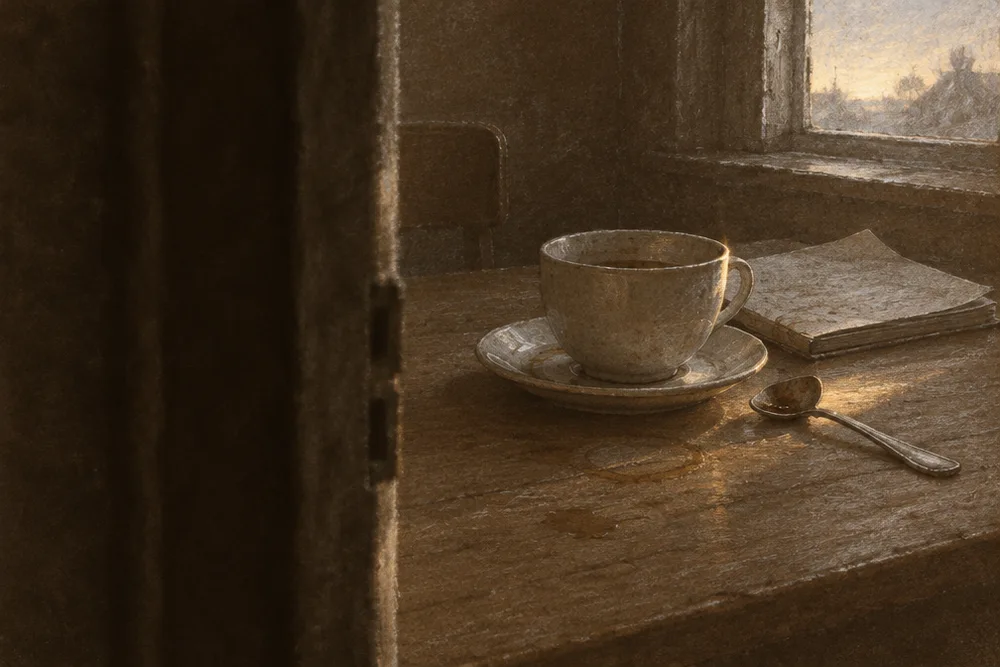
She paused at the kitchen door and looked back. The cup of tea was cold; the spoon still bore its blue stain. The empty pad remained open to the page where she had first written that the cause was uncertain. There had been uncertainty. There had also been a fact she had chosen not to carry forward.
At the bottom of her working statement, she had added a sentence in her own hand: I cannot restore the evidence to the time when it was needed. I can only place it before the families and the review now, without asking them to relieve me of the decision I made.
Mair closed the kitchen door behind her. The wet lane climbed toward the road above the yard. She held the case close beneath her coat as she walked, not to keep it dry but to keep it from slipping. At the bend, she could see the ferry’s low cabin at the slipway and, beyond it, the estuary moving under the new morning light.
The report would not settle the river. It would not bring back an apprentice or tell a family what the final seconds had looked like. It would not make the old chart honest by being corrected now. But the route would be named in the record, and the woman who had removed it would be named beside the act.
Mair reached the road and turned toward the yard. The first workers were coming down from the hill, their boots leaving dark prints on the pale grit. She carried the case among them, each step deliberate, the tide running unseen beneath the ferry’s hull. At the yard she could leave the old notes under seal. Her statement would stay in the brown envelope until someone had read it closely.