The Lake Has Office Hours
Page 7 of 276
Chapters
For an hour, the room’s ordinary demands held. A wall clock needed a new suspension spring. A cuckoo clock came in with a bird whose beak had been glued shut. A woman picked up a wristwatch and left a paper bag of apples as payment for a repair Maren had discounted. The bell rang, the clocks continued, and the world maintained its steady pretense of being governed by objects that could be opened and understood.
When the last customer left, Maren brought out the map again. She took a ruler from the drawer and measured the blue-shaded area against the printed scale. The line crossed the building footprints without regard for walls or elevation. It covered her shop, the upstairs apartment, the baker’s old storefront, the little row of houses climbing the slope. The reservoir’s actual shoreline was printed on a different layer, a thin contour far beyond the street.
She checked the map’s corner. It bore a project number and a revision date from nine years earlier. No author, no field notes, no source citation. Just a county seal and the words EXISTING RESERVOIR LIMIT. She felt the old familiar anger of a person looking at a typed transcript after hearing the call itself. The page had been cleaned until nothing human remained on it.
Her phone rang. The number was blocked. Maren let it ring twice, then answered. “Mowbray Clock Repair.”
“Ms. Mowbray?” A man’s voice, measured and low. “This is Edric Verramont in the county property office. I understand you visited the reservoir office today.”
“I understand you sent me a check.”
“I sent a relocation payment based on the county’s parcel schedule. I’m calling to make sure you have it.”
“I don’t.”
There was a quiet pause. “Then we should discuss the discrepancy.”
Verramont asked her to come to the property office the next morning. Maren asked him to send the deed review instead. He said the record was complicated; she said it was a deed, not a weather system. He did not laugh. He offered to have someone call her back, and she ended the call before he could make the offer sound like a favor.
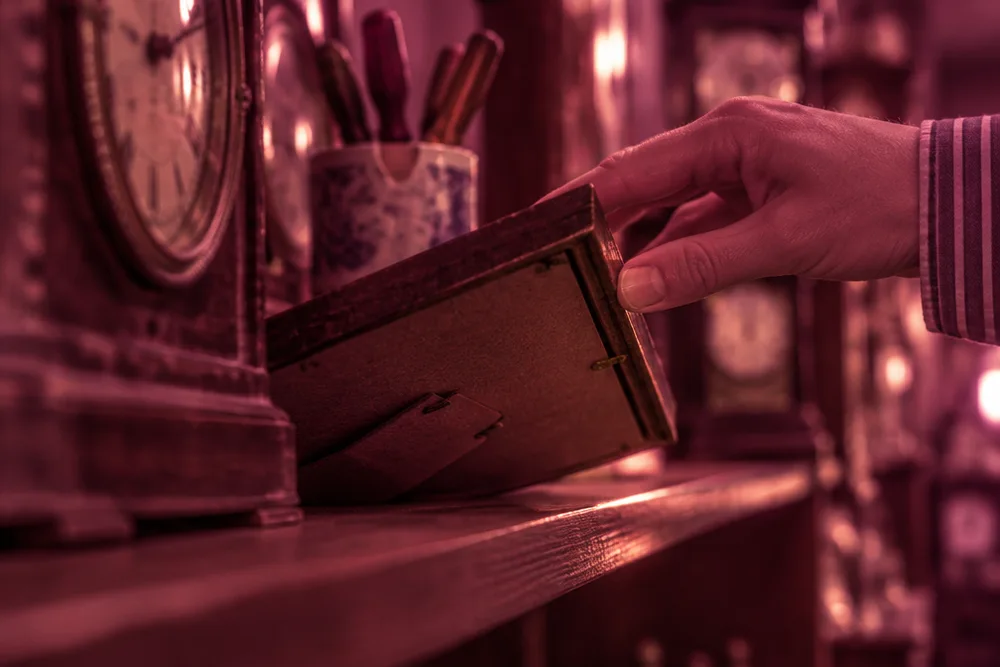
She returned the customer’s clock to its case and wiped her fingers. The shop had a telephone with a curled cord, a chipped ceramic mug full of screwdrivers, and a narrow calendar marked with delivery dates. Everything belonged where she had put it. On the narrow shelf behind the counter, a framed photograph showed her father at the shop door, one hand raised to block the sun. She turned the frame facedown on the shelf.