The Lake Has Office Hours
Chapter 12 · Room Tone
Page 113 of 276
Chapters
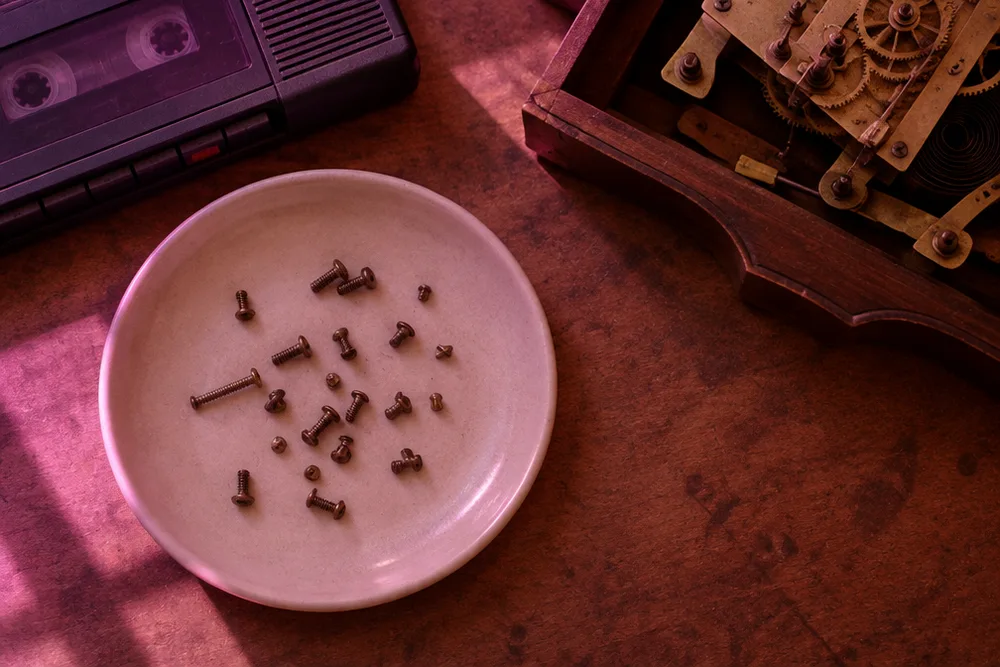
The cassette had been in Maren’s shop for two nights, and already she knew its defects by heart. The right channel hissed whenever Yale Sutter shifted the recorder. A chair leg scraped across the room at thirty-one minutes, twelve seconds. At the end, a man cleared his throat and said something swallowed by the click of the stop key. None of that established where the tape had been made, or when. A cassette could be labeled with anything. A voice could be borrowed from any room.
Maren sat at her workbench with the recorder between a dismantled mantel clock and a saucer of screws. Outside, the street leaned down toward the reservoir office, though the lake itself lay below the shop sill. Her canvas apron was striped with old grease. She bent ear-first over the speaker, one forearm planted beside the tape deck, and pressed PLAY again.
The chairs scraped. A murmur swelled, broke apart. Then a woman’s voice announced the meeting date, clear enough to be heard over the room: Tuesday, October seventeenth. Maren stopped the tape. She had listened to that line before, but the identity of the speaker had been a question Yale could not answer. He had found the cassette among the things he kept from his surveying years. He knew the meeting was about the proposed flood line. He did not know who had recorded it, or why his copy had survived.
The brass clock in the window ticked four seconds slow. Maren reached for its pendulum, then left it alone. A repair could wait. The tape needed a witness who recognized the voice, and the only person Yale had suggested was Inez Bell, who had been at the hearing and had worked as its custodian. Maren had seen Inez in the office doorway on Tuesdays, carrying flowers. She had never asked what the flowers were for.
The cassette sat in a cloudy plastic case, its handwritten label faded to a gray scrawl. Maren turned it over. YALE had written the date in block capitals on the spine, but even he admitted he might have added it years later. The county’s official minutes said no one objected to the original flood line. The tape seemed to say otherwise. Seemed was not a word that would survive a hearing.
She put the recorder in a cloth tool bag and checked the door lock twice. On the bench, the clock’s hands waited at 2:17, held there by her own work. She could hear her father’s recorded voice whenever the shop grew too quiet, though she had not played his emergency call since the week she quit transcription. The old habit of listening until every word settled had not left her. She only wished it had.