The Lake Has Office Hours
Page 228 of 276
Chapters
The courtroom was smaller than Maren expected, with a high window that admitted a gray square of daylight and benches polished by generations of waiting. A clerk arranged files near the empty judge’s chair behind the plain wooden bench. Verramont occupied the table opposite the residents, his raincoat folded over the back of his chair.
Maren sat between Inez and Yale. Tamsin had squeezed into the row behind them, carrying the stamped receipts. Orr stood near the side wall with his hard hat tucked under his arm. When the judge entered, silver-haired and dressed in a plain black robe, everyone rose. Maren’s knees clicked as she straightened.
The county’s lawyer went first. He described the flood project, the emergency exclusion zone, and the existing authorization to remove structures within the corridor. He called the demolition a protective measure and said delay could expose the public to a known danger. The lawyer did not mention the twenty households until the judge asked about them.
“The county has become aware that some parcels may be occupied,” he said. “That circumstance does not eliminate the hazard.”
“No one says it does,” Maren said, then heard herself interrupting. The judge lifted her gaze. Maren stood. “We are not asking to re-enter during a flood warning. We’re asking the county not to demolish occupied buildings before the evidence can be reviewed.”
The judge looked at her folder. “You are Ms. Mowbray?”
“Yes. I own no land yet. I have a paid rent-to-own contract on the shop. The county’s map lists it as submerged.”
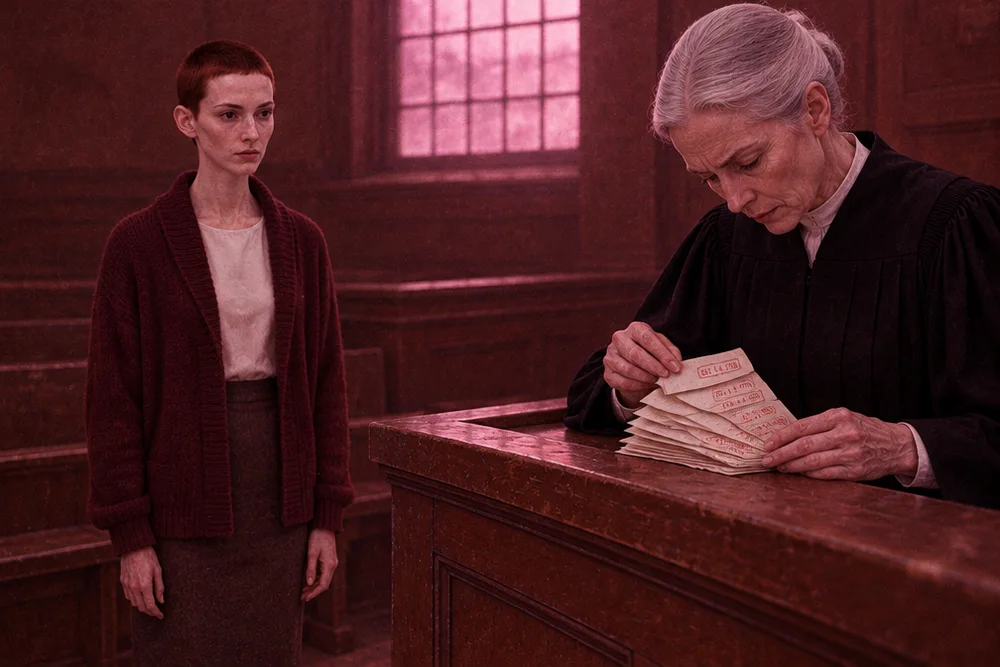
“That question is not before me today,” the judge said, without impatience. “The immediate question is whether demolition should proceed before a hearing on the evidence.”
The county’s lawyer objected to the phrase occupied buildings, saying the property roster had not been verified. Tamsin rose from the back row and presented the intake receipts. The judge accepted them for identification, not as proof of title. She looked over the pages, paused on the repeated red dates, and asked how they had been obtained.
“From the original counter entries,” Tamsin said. “The public system rejected the addresses after they were marked acquired. The receipts remained in the intake files.”
“And you are a county employee?”
“Yes.”
Verramont shifted in his chair. Tamsin did not look at him. Maren felt the room narrow to the paper in the judge’s hands and the sound of rain ticking against the high window.