The Lake Has Office Hours
Page 173 of 276
Chapters
She held the folded plan against her apron. “You should understand something. If the route saves the neighbors, I won’t pretend that doesn’t matter. If it takes my shop, I won’t pretend that doesn’t matter either. I’m done being asked to make one of those facts disappear so the other one fits on a county form.”
Yale felt his shoulders sink. “You shouldn’t have been asked.”
“That won’t change what happened.”
“No.”
She went to the table and turned the map so the north arrow faced the window. “The benchmark is under the shop stairs. It survived the water. If the engineer wants to work from it, he can. But he’s going to see where the water came from first.”
“The alley.”
“The alley. The stain. The blocked channel. I don’t want anyone saying the lake climbed over the causeway when the water came downhill behind us.”
Yale nodded. The corrected direction was a small piece of the record, but small pieces were how the county had assembled its version. He would have to help take it apart the same way: one mark, one receipt, one line entered beside another.
“I’ll meet him there,” he said.
“Then bring your field book.”
The request left him with no place to put the old excuse that his figures were accurate. A correct elevation could support a false conclusion when the person reading it chose which line to leave out. He had measured the ground honestly and certified a street empty. Both things were true; only one had made it into the file.
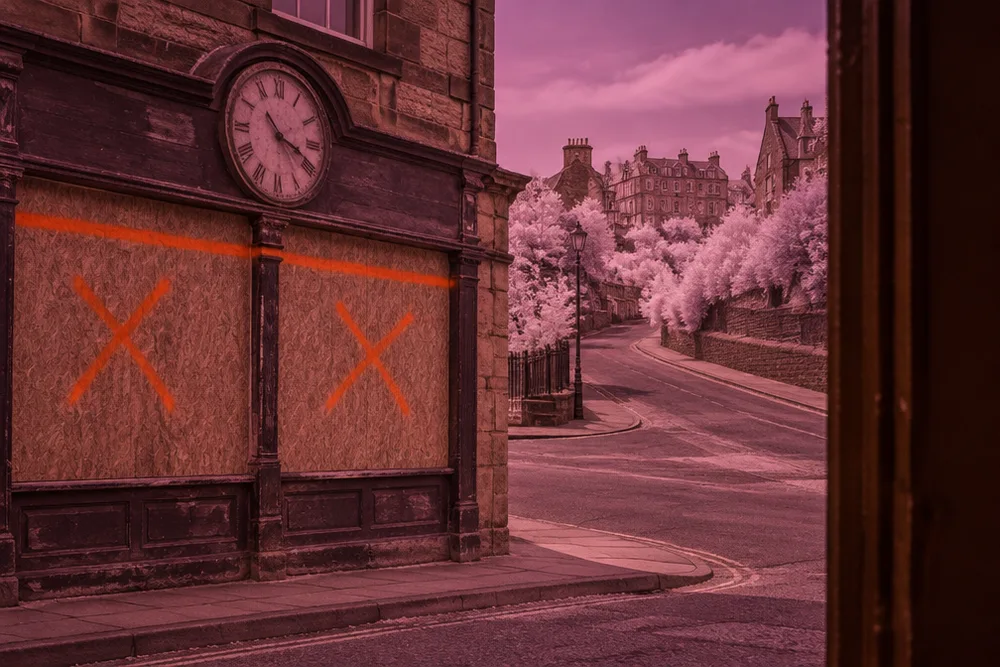
Maren turned away to carry the map to the far table, where the shelter’s paper notices were being sorted. Yale watched her go and then looked through the annex doorway. Across the street, the shop’s boarded windows sat below the orange demolition mark. Beyond it, the slope rose toward the buildings the bypass might protect. The road crew’s truck waited at the bottom, beacon dark now, its folding rule put away.