Six Eggs and a Share in the Ferry
Page 89 of 251
Chapters
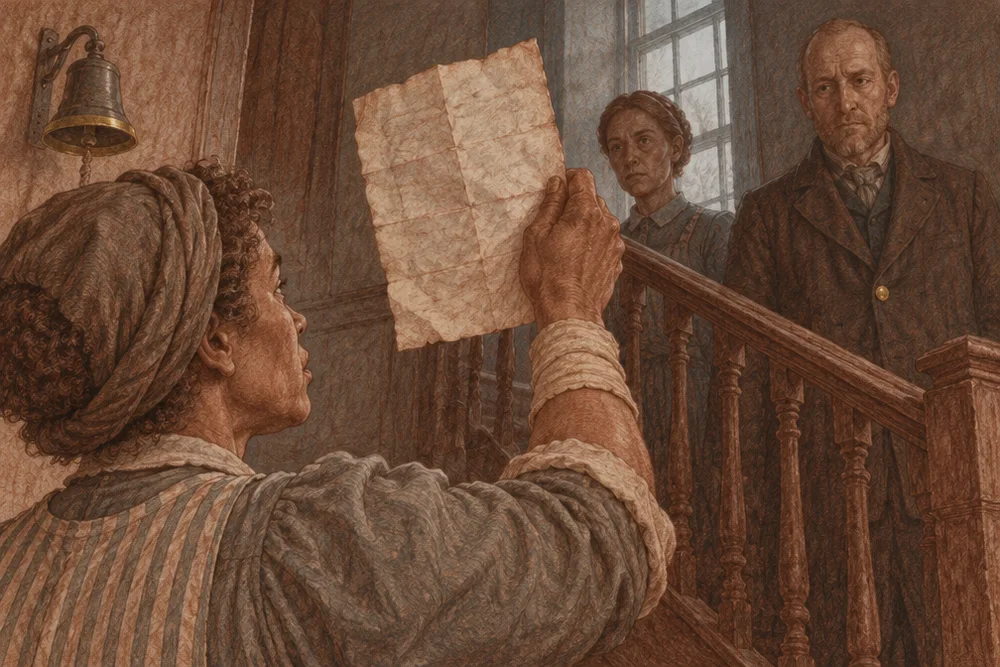
Silas folded the paper along its old creases. “There were winters the ferry earned next to nothing. There were also winters rope cost more than we’d planned.”
“Did the households get their share?”
He looked down at his hands. One was spotted with age, the other nicked where the wood had cut him. “Not every time.”
Agnes watched his face, waiting. Silas disliked the patience. It left him no convenient place to hide a falsehood. He had not come to Lint Fold to unearth the past. He had come because Agnes needed witnesses, and because, since the burial, the old ferry bell had become a question everyone expected him to answer.
“I’ll tell you what I know,” he said. “No more than that.”
“That’s what you promised at the landing.”
“And that’s still what I’ll do.”
She looked toward the loft doorway. The stair waited open beneath them, its tread tilted up like a lid. “Then we need to know whether anyone remembers the terms.”
“The daughter who brought you here remembers a notice. She didn’t say she remembered the promise.”
“She said her mother kept the paper under the stair. She thought it was a receipt.”
“It isn’t a receipt.”
“No.” Agnes touched the margin of the sheet, not the writing. “But it’s more than my word.”
Silas heard footsteps below. Martha Rigg’s broad voice called from the sorting floor, asking whether the stair had finally been dealt with. Her voice held no concern about what the paper might mean. Martha had never given much value to promises not attached to a person who could answer for them.
“Don’t let her tear up here,” Silas said. “The tread’s loose.”
Agnes went to the opening. “We’ve found something.”
“If it’s a dead mouse, I’m not coming up to admire it,” Martha called back.
“It isn’t.”
Martha appeared at the bottom of the stairs, wiping her hands on the striped apron. Her wrapped wrists were yellowed from soap. She looked at the lifted tread, then at the notice in Silas’s hand. “What did you find?”
“A promise that the ferry shares were to earn fare income after rope costs,” Agnes said. “It names no subscribers.”
“Does it name the wash fund?” Martha asked.
“No.”
“Then it doesn’t tell the board my household’s name.” Martha set her feet apart on the lower floor. “A paper can promise money to whoever it likes. The money I paid came from the women’s wash fund, and I won’t have it called charity because some old man wrote a notice without writing us down.”