Six Eggs and a Share in the Ferry
Chapter 2 · Six Beds on Paper
Page 12 of 251
Chapters
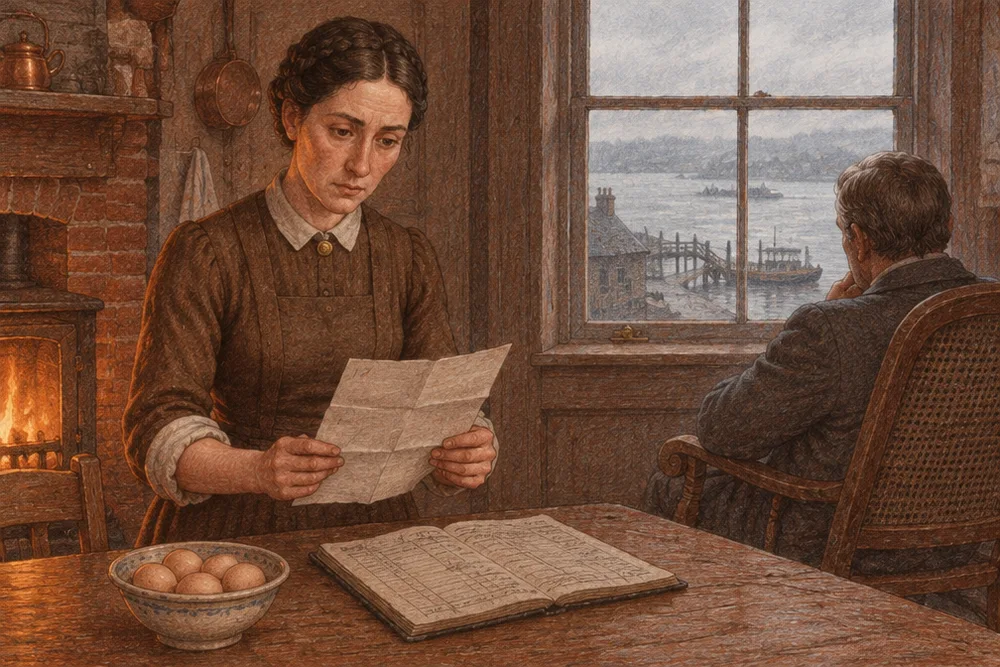
The estimate came folded beneath the door, though Agnes had been expecting it since the appraisers left. She opened it at the kitchen table, beside the six eggs she had bought that morning and the ledger where she kept the carters’ meal money. The figure for the house was written in a clerk’s narrow hand. She read it once, then again, as if the second reading might include the ferry by some kindness of arithmetic.
It did not. The sum allowed for the cottage, the fixed bench, and the small strip of garden. Nothing for the landing, the boat, or the work of carrying people across the beck. The house figure alone fell short of what the agent at No. 8 Shuttle Row wanted for a deposit. It fell short even before Agnes counted the cost of moving, which she had not yet dared to do.
Her father sat by the window in his cane chair, curled forward over his plum knitted vest. The worry bead moved under his thumb. His silver hair, brushed straight forward, hid the hollow above his brow; his face had grown so narrow that the triangular jaw seemed sharper than it had been in winter.
“Well?” Edwin asked.
“They’ve put a price on the bench.”
“And the rest?”
“There is no rest in the figure.”
He looked toward the window, down to Penny Staithe, where the ferry rope sagged between the landing posts. “They’ll have to price the crossing.”
“They have not.” Agnes folded the estimate in half and kept her thumb on the crease. “They have priced what they could see without asking what it was for.”
“Then ask them to see it.”
She had been considering the house as a door she might close behind her. In Keldwick, No. 8 Shuttle Row had six beds and a separate entrance to the kitchen. The agent had told her that boarders would come from the mill, and that a woman who could feed them well might keep the place full. Agnes had imagined a key in her own pocket, not a life of ease. A front door she controlled would be enough to begin with.
But the numbers on the estimate would not bring that door within reach. She worked them on the back of a carter’s bill: the house award, the money in the tea tin, the earnings from meals if the appraisers let her stay until clearance. She left out the price of a stove, because she already owned one. She left out a bed for herself, because she could sleep in the smallest room. Still the total would not stretch to the deposit.