Six Eggs and a Share in the Ferry
Page 8 of 251
Chapters
That evening, after the last caller had crossed and the kitchen had been swept, Agnes took a sheet of paper from the drawer. The first line came easily enough: she requested a valuation of the ferry boat. She paused before writing what came after. A boat could be priced by wood, iron, and age. The ferry was a boat, but it was also the rope, the landing, the fare collected from people who had no other convenient way across.
She wrote that the service had been maintained from their household and used by the inhabitants of both banks. Then she crossed out “their household.” It made the ferry sound like a private convenience. She tried again, saying that the boat and undertaking had been in use for many years and formed a necessary crossing for the village.
Edwin listened from his chair while she read the draft aloud. At “necessary crossing” he gave a faint nod. Agnes sanded the ink and folded the letter. She would send it in the morning, before the board could settle the house and forget the water between one side of Latch Beck and the other.
The bell above the door gave a tiny tick as the wind pressed the half door inward. Agnes looked up. Its rim was plain from where she stood, blackened and old, no more than a piece of household brass to anyone who did not know the sound it made over the beck.
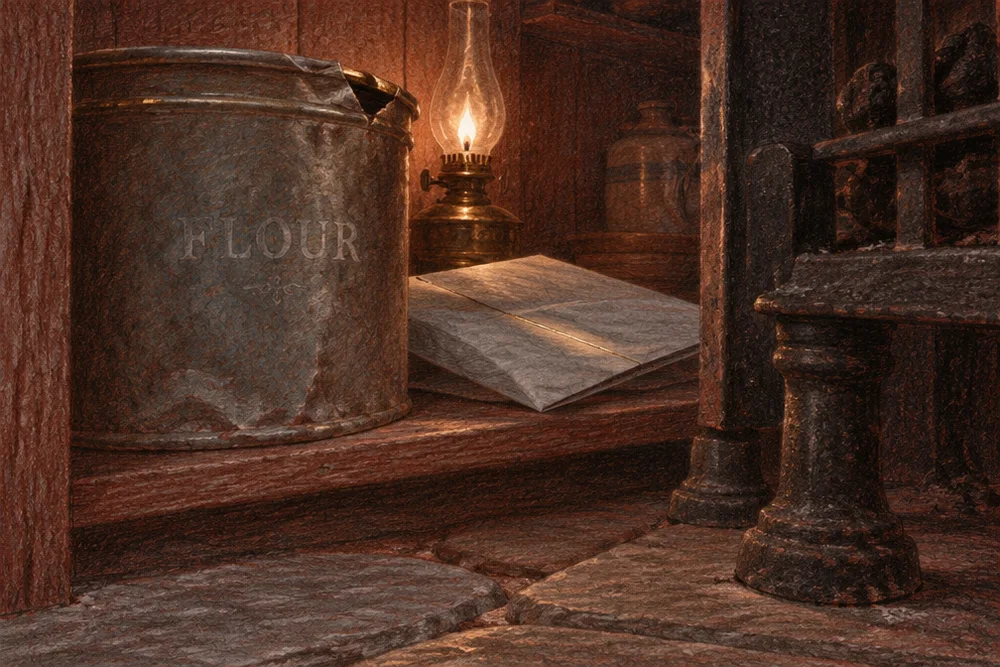
She set the letter beside the flour tin and reached to make sure the bell was secure. Her fingers closed around the pearwood grip. The metal was cool. For a moment she imagined carrying it into Keldwick, setting it above the kitchen door at No. 8, and hearing it ring in a house where the front step belonged to her.
Then she let go. The letter was still only a request, and the board might answer that the crossing had no value apart from the boat. But the house estimate had fallen short, and the ferry was the one thing left that might bring the figure near enough.
In the morning she would ask them to value it. She folded her cuffs twice, though the day’s work was done, and went to bank the grate.
The letter went with the first post. Agnes had addressed it to the board’s clerk and asked for an entry covering the ferry as well as the house. She did not write that she needed the money for a boardinghouse. It was no concern of the board’s what she meant to do after they took the valley, though the thought sat behind every line she had put on paper.