Six Eggs and a Share in the Ferry
Page 247 of 251
Chapters
But she had no wish to make a signal the water could not answer. Instead, she set the basket more firmly between her shoes and looked toward the next stop.
Nell turned from the main track into the lane for Sedge End. “We’re five minutes early,” she said. “If the gate’s shut, I’ll wait. I won’t drive into that yard again; the wheel sank to the hub last time.”
“It’s open now,” Agnes said. “And there are two people by it.”
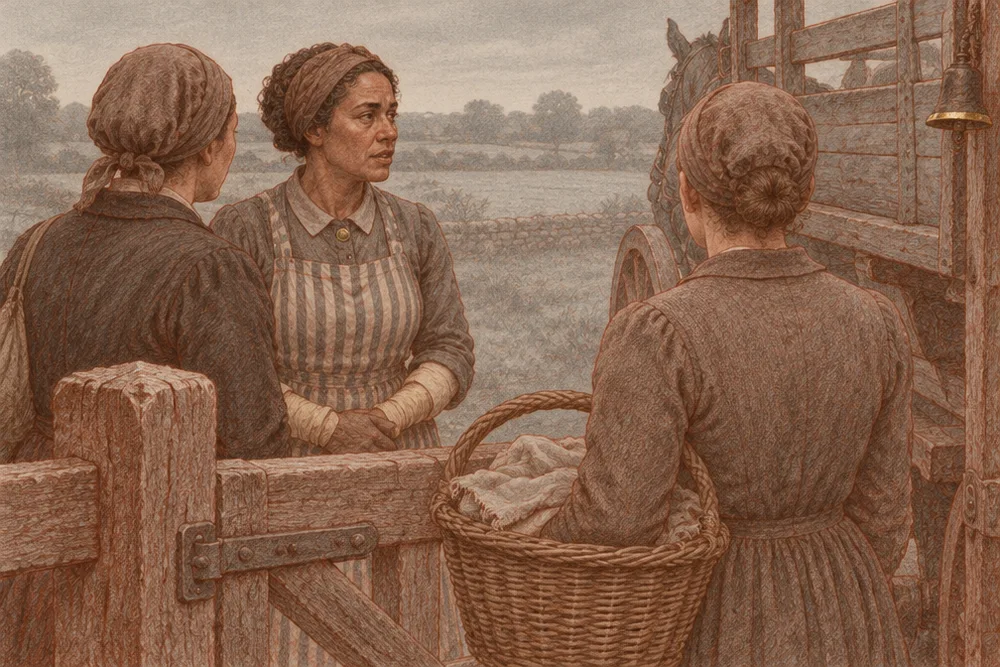
The first was Martha Rigg, broad-backed beneath her striped apron, her wrists wrapped in yellowed linen. Beside her stood a woman Agnes recognized from the first paid run, although she could not recall her name. Both looked toward the wagon as if its arrival were the start of a piece of work they had arranged between them.
Nell stopped on the firm edge of the lane, and Martha came up with a folded paper in one hand. “I’ve got names for the wash,” she said. “Two households want eggs. One wants flour if the price is what you said.”
“The flour’s a little dearer this week,” Agnes replied. She named the price. Martha looked down at the paper, then up again.
“I can take the eggs now. The flour can wait till next week.” She glanced toward the woman beside her. “And there’s the question of credit.”
The woman said, “It would be easier if you left the goods and put the amount against the next wash collection. We’ve done it before.”
Agnes felt the old impulse to say yes before she had worked out what yes would cost. The eggs were hers to sell, but the flour would have to be bought in Keldwick, and no one could promise the next collection would bring enough. “I can’t leave goods against a future payment,” she said. Her voice sounded harsher than she intended. “Not as a standing arrangement. I’ve my rent to meet, and I can’t lend out what I haven’t earned.”
Martha’s eyes settled on Agnes’s face. “You’ve got a right to say that.” She did not try to soften it or argue. “But I’d hoped you might.”
“I know.” Agnes put the basket on her knees and unwrapped the cloth around the eggs. “I can carry paid orders. If you collect the money first, I’ll bring them on the next run. And if someone can’t manage the full cost, I’ll tell you what I can make from the goods I’ve already bought.”