Park the Buses for a Blackbird
Page 55 of 214
Chapters
Vera looked at the occupied seats reflected in the glass. A boy leaned his forehead against a window. The tool bundle lay across its owner’s knees, tied with twine. Even in rehearsal, the buses did not belong to the ceremony. They belonged first to the route.
Suri drew a small mark at the layover line. “Again from the junction. We need to see what the apron does to the connection.”
They ran the junction twice. The first time, a delivery truck blocked the turn into the former freight strip. The second, an orderly queue at the lights let them through, but the bus had to swing wide around a bollard set where the old curb had been. Mercer Apron opened behind a shuttered produce shed: a flat layover strip with room for three buses, if the council display trailer was not sitting across its middle.
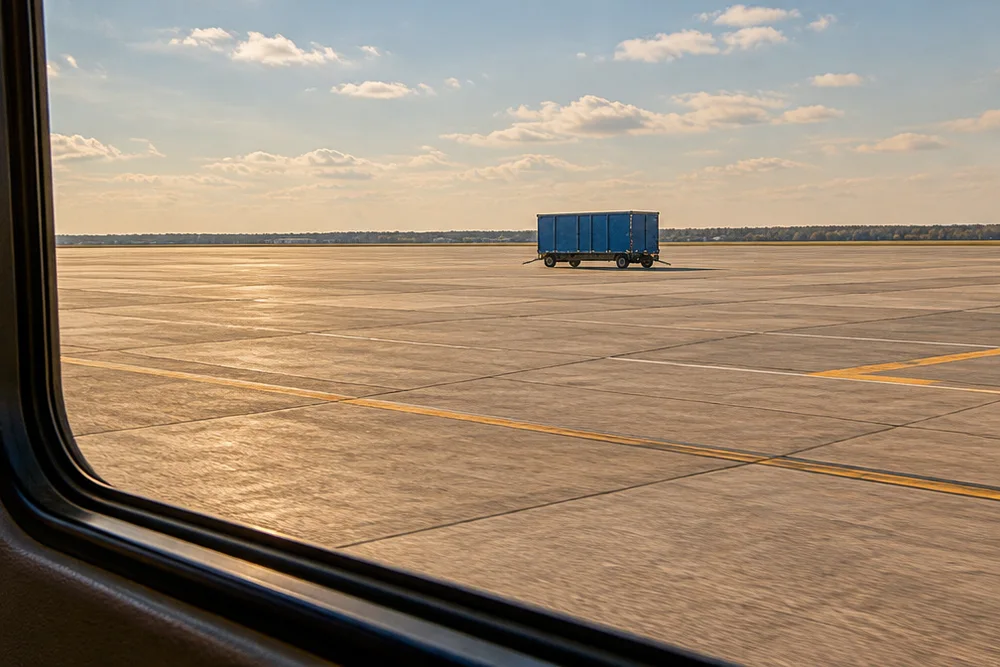
The trailer was already there, broad blue side turned toward the Chamber Annex. A cable ran from its rear toward the municipal ticket office. The display panels showed polished drawings of Bellwick’s transport future: clean new bays, tiny riders, no wet coats, no double-parked vans.
Suri leaned over the driver’s shoulder. “That’s our three-bus space.”
Vera counted the trailer wheels, then the painted limits of the apron. “Could it move?”
“It can. But that’s not the only problem.” Suri pointed to the route sheet. “One scheduled operator can’t make the diversion and keep the connection. We could add a relief shift. That costs money and needs an actual person to take it.”
The bus stopped beside the display, and the engine trembled beneath Vera’s shoes. On the trailer’s glossy rendering, the apron seemed open and waiting. Outside, there was barely room to walk between its wheel arch and the shuttered shed.
“So the site is occupied, and the driver is missing,” Vera said.
“That’s a clean summary.” Suri looked at her. “Do you want the untidy one?”
The untidy version was written in the timetable. They had a route to keep running, passengers to carry, lawful breaks to protect, and a special stop that had been printed as if a public service could be moved like a chair. Suri showed Vera the planned sequence: three buses at Mercer, then the drivers covering their ordinary duties. The north connection fell six minutes short if its operator had to make the diversion alone.
“Last year they used Latcher Tire’s forecourt,” Vera said. Orren’s map had shown two buses there, though the new route sheet now promised three.