Park the Buses for a Blackbird
Page 51 of 214
Chapters
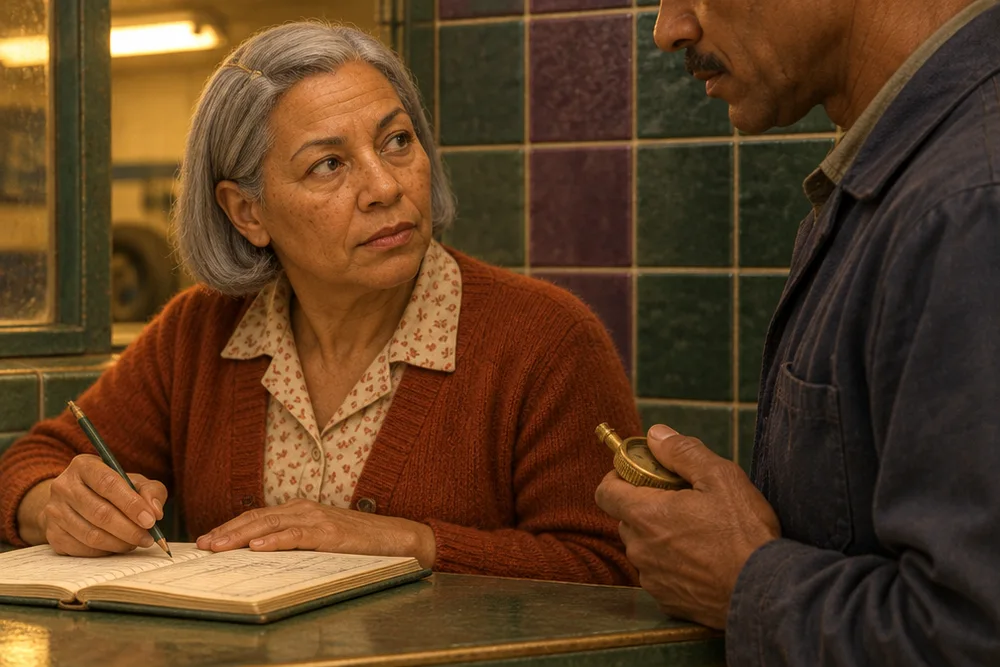
She paused over the word accommodate. It sounded like they were being asked to host guests. She crossed it out and wrote fit.
Orren put down the receiver. “You’re writing a refusal for me?”
“You said nobody asked.”
“I said they sent a plan. I didn’t say I wanted you speaking for the shop.”
Celia looked up from the page. His mouth was narrow, not angry, but he had drawn his shoulders back. The brass gauge sat in his hand, thumb rolling its edge.
“You’re right,” she said. “I’ll leave it for you to sign, or not.”
He took the page and read it. “This bit about two buses. Don’t offer that either. If they have a proper bay, fine. If they don’t, no.”
Celia crossed out the sentence and wrote the correction. “Better?”
“Clearer.” He set the page beside the ledger. “I don’t want to be the fellow who spoils their pretty ceremony. But I also don’t want an ambulance trying to squeeze around a bus to get to the bays.”
“You won’t be spoiling anything by saying where a truck can turn.”
Orren looked toward the open shop doors. “You’re the one who has to live with what people say about it.”
“I already do.”
The sentence sat between them, too blunt to be a promise and too old to be a complaint. For years Celia had let other people tell her what the annual pause meant. She had corrected small things when they came within reach: her mother had not named her for it; she had not gone away forever; there had been no disaster. Most versions carried a solemn voice and a blank where a person might have been.
Orren folded the refusal in half. “I’ll send this in. They’ll come back asking for a meeting.”
“Probably.”
“You could let me handle it.”
Celia closed the ledger, careful not to catch the bent corner. “I can ask them to find another stop.”
“That’s not the same as handling it.”
“No.” She slid the route map into her bag. “It isn’t.”
She did not want to be the annual exhibit, but that did not mean she had to leave the map unchallenged. The printed plan was already a consequence of the story: a favor repeated until it became civic property, then a symbol used to claim space. Refusing the curb did not refuse the quiet. It refused the city’s assumption that the quiet came with a guaranteed place to park.