Park the Buses for a Blackbird
Page 181 of 214
Chapters
The timer on the console had gone blank. Vera reset it by habit, thumb resting briefly on the button. The channel stayed live, but there was no more anniversary copy to deliver. The space between the room and the apron was now full of sounds again: a bus engine, a few voices, the scrape of shoes on the concrete. None of them needed a name from her.
Ned did not return to the microphone. The council clerk kept to the agenda. There were papers to distribute, a motion to introduce, and questions to take. From the loft, Vera could see only part of the room below, a narrow angle through the glass and a strip of table. She put the folded cue card face down. Its approved words were not going to rescue anyone from the choice she had made.
Her hand hovered over the mic switch. She could end the feed early, but the chamber proceedings were public and the broadcast belonged to them now. She left the channel open. A sound technician was supposed to know when a line had gone dead, when a speaker had failed, when a minute of silence had become a technical problem. She did not have a meter for the moment a city began to hear the difference between an account and a legend.
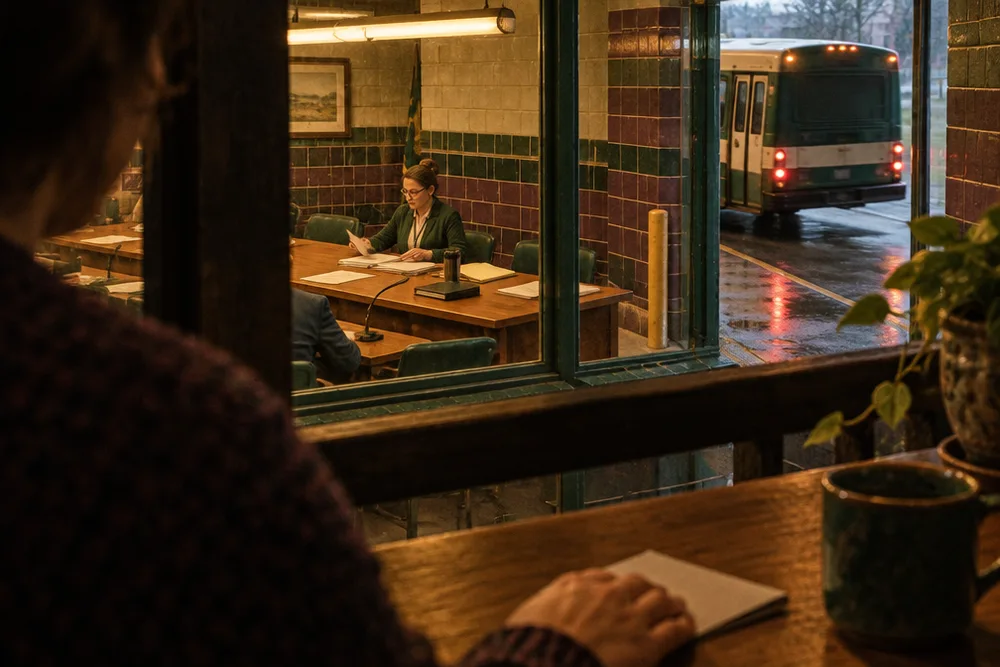
The bus that had left the near bay moved past the produce shed and vanished from the window. The next bus waited with its driver at the wheel. A rider climbed aboard, gripping the rail with both hands. The driver watched the curb until the rider was clear of the steps. Suri lowered her elbows a fraction. The stop had ended. The work of carrying people had resumed.
Vera drew the signed correction toward her and unfolded it. The creased paper would be easier to read now that the chamber had it on the record, but she did not need to read it again. She had said the sentence she had prepared. She had left out the names, the proof clips, and the funding appeal. The live feed had carried seventy-nine seconds of the apron without her voice.
There would be questions about the tape. There would be questions about why she had waited until the observance, and why a municipal sound technician thought she could decide what the city was allowed to hear. People might say she had used the microphone to influence a vote. Others might say she had endangered the archive by refusing to play its most compelling sound. She could not answer those questions without making the next decision at the same time. For now, she had not been asked to answer them.