A Light for One Window
Page 154 of 225
Chapters
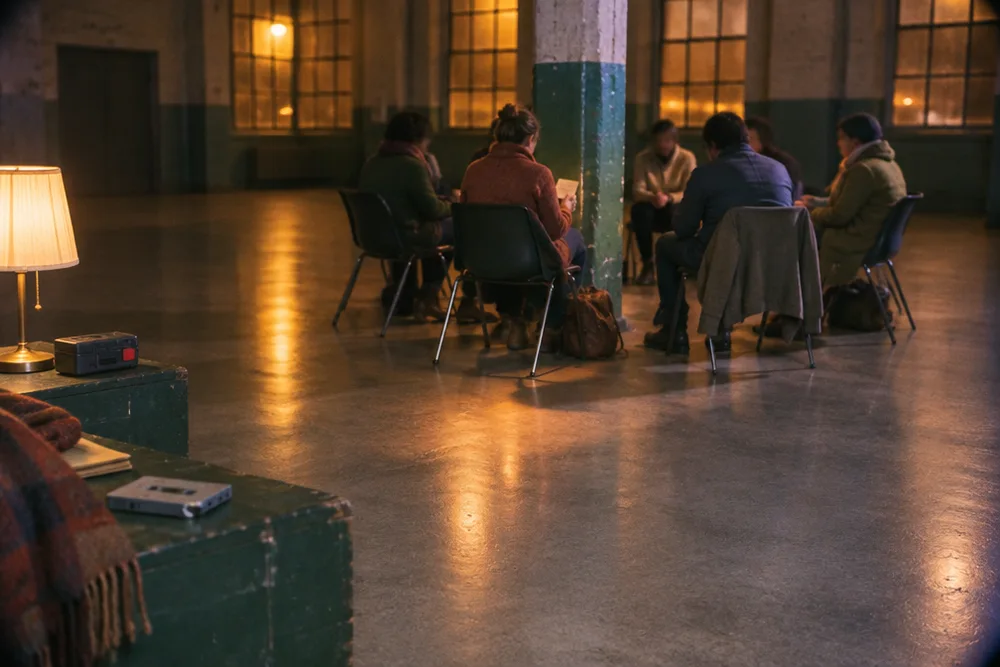
Someone shifted a chair, scraping its legs across the hard floor. The sound broke the stillness without breaking the conversation. Tamsin took out her prompt card again. “A change,” she said. “Is there something about the vigil that changed for you?”
The rope-handed man said the bell used to be farther upriver, where the sound reached the working berths. A woman in a gray cap remembered a year when one whole street had forgotten to darken its windows until a child ran door to door. Someone else said the blackout had become more important once the harbor grew quieter. Their accounts crossed at the edges. None came with a date Tamsin could safely attach to them.
Orla listened with her arms folded. When the woman in the gray cap mentioned her child, Orla asked if she wanted the story written down. “Not the name,” the woman said. “Just that people went and knocked.” Orla nodded, and Tamsin wrote that much. She had begun to understand that asking permission did not have to turn every sentence into a form. It could be as simple as stopping before a name.
The sail cutter returned to the photograph. “Those six windows weren’t for the sailors, not that night. Nobody had told us to darken anything. We were just doing what Nell did.”
“You can’t know what everyone meant,” the checked-jacket neighbor said. Her voice had lost its sharpness, but she was not yielding the point.
“No,” he admitted. “I can’t.”
The neighbor rubbed her thumb along the seam of her jacket. “My brother said people on that street were checking which houses were still awake. That could be what it was.”
Tamsin wrote both statements. She drew a line between them, then erased it. The line made them look like rival explanations, and they did not have to be. The photo could not settle intention. The witnesses could disagree about the night and still remember the same windows.
A man by the doorway asked whether the eleven minutes were still timed by the bell keeper’s walk. Orla said the first interval had been set to the keeper’s rounds; the harbor’s work had changed, but the time had stayed. “Eleven minutes is long enough to feel,” she said. “Short enough to come back from.”
“Back from what?” someone asked.
Orla considered. “That depends who you ask.”
Tamsin looked at her notes. The page had become a mess of arrows, brackets, and careful gaps. She had arrived ready to make a clean recording from scattered facts. Here, the facts kept arriving attached to people who had different reasons to carry them. She could not flatten those reasons without changing what she had heard.