A Light for One Window
Page 153 of 225
Chapters
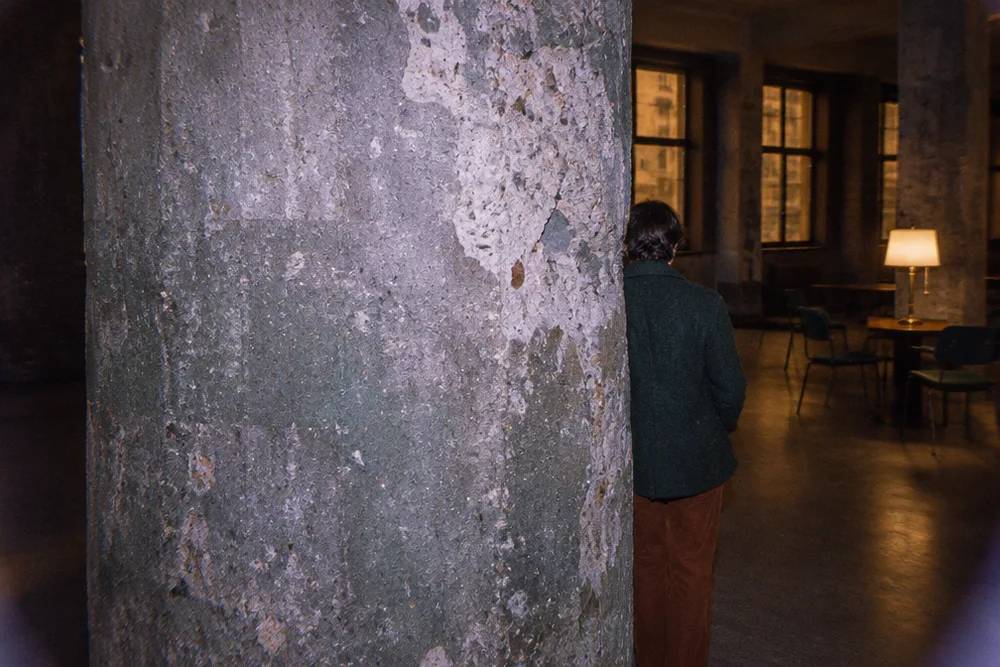
Wystan had been near the pillar throughout, one shoulder almost touching its rough surface. Now he stepped into the space between the small circles. He was tall enough that people had to look up, but he folded at the hips the way he did in the sign shop when listening to a customer. His copper forelock fell forward as he glanced at the register.
“I used to hate this night,” he said. He looked at Nell, then at Tamsin, then past them to the rows of chairs. “Not the lamp. The part where people came to look at the window and stood across the lane while Gran walked home.”
Nell’s heavy lower lip tightened. “I didn’t know you hated it.”
“I didn’t hate you being there.” He rubbed the carpenter’s pencil tucked behind his ear, an old habit Tamsin had seen him use when he was choosing letters. “I hated the tourists making the whole thing into a picture. They’d face the window. Gran would come down the steps and they’d block the way. I was younger. I’d wait by the rail and try to get them to move without making a scene.”
“You could have told me,” Nell said.
“I know.”
Tamsin felt the reflex to ask whether that had changed for him, whether the vigil now meant something different. But his answer had been offered as itself, not as an invitation to investigate. She kept her hands away from the gray recorder. Wystan’s testimony was his to shape, and he was still finding the shape of it.
A man in a deck jacket asked, “So you were watching for her, not the sea?”
Wystan turned to him. “Some nights, yes.”
“That’s a vigil, then,” the man said. He spoke with a roughness that might have been skepticism, but he did not mock him.
Wystan looked down at the floor. “I don’t know what name you give it. I just wanted to see her get home.”
Nell reached over and touched his sleeve with two fingers. He leaned slightly toward her, not quite enough to make it an embrace. Orla, standing beside the closed register, watched them without speaking.
The mitten-holder spoke again. “That’s why I come for my sister. Not because she was at sea. I want to know there’s a place where people can wait and not have to say they’re finished.”
“That’s it,” Orla said, softly. “That’s why I keep the interval.”
Tamsin’s fingers curled against her notebook. The room held three versions that did not cancel one another: Nell’s lost cat and neighbors’ lamps, Orla’s brother named in the register, Wystan watching the path home. She had thought a history needed a single door marked entrance. This room had more than one.