Where the Last Ferry Waits
Page 49 of 218
Chapters
Pippa watched her climb until the stair lights took her from view. Then she folded the freight docket and the tally together, keeping the company’s passenger count visible on top and the bookings beneath. The figures were still small. They were also not enough.
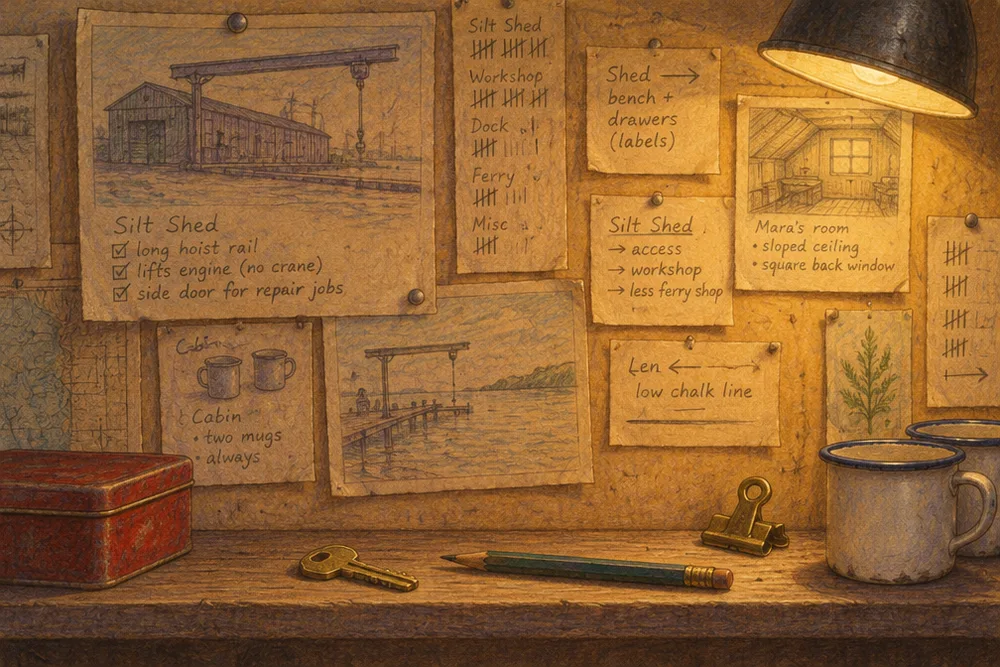
In the maintenance room, Pippa pinned the sheets to the wall with two bolts from a tray. Passenger totals. Freight bookings. The ramp worker’s unloading constraint. Dev’s terms. She drew a line from the late sailing to each item it carried, then another line toward the earlier crossings. The page filled with arrows that ended in questions.
Could the repair crates go on the penultimate run? Could the ramp worker leave the landing long enough to unload them? Could somebody be paid to cover the overlap? Could the boat wait at Plover Quay while the freight was transferred? Each option had a cost, a delay, or a person’s time attached. None could be crossed out by looking only at the passenger column.
She took the inspection key from her coat and turned it over in her palm. It was plain, untagged, and cut for the lock on the shuttered Silt Shed. The shed’s hoist could lift an engine without borrowing a crane. Its side door could admit a repair job without running it through the ferry company’s shop. Pippa had already pictured a bench there, her tools in drawers with labels she chose herself. That desire did not make the recommendation true or false.
At the foot of her notes, she wrote: Thursday, ask ramp crew about transfer. Ask Dev which fixed nights. Confirm crate dimensions. Get proposed hours for Mara. She underlined the last item once, then crossed out ask Mara what she wants. Mara had already told her: the schedule, not a promise.
The ferry settled against the berth outside, its hull making a hollow sound against the fenders. Pippa put the key down beside her pencil and returned to the figures. The open question was not whether the late run mattered. It was which work could move to another crossing, and who would be asked to do the moving.