Where the Last Ferry Waits
Page 142 of 218
Chapters
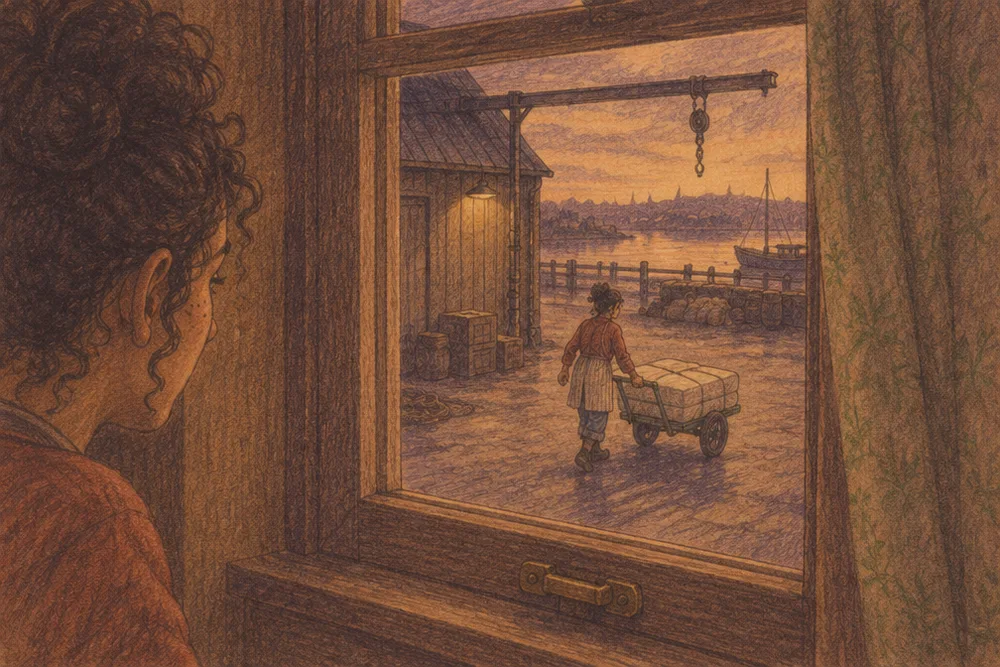
The van arrived late. Tess’s nephew had stopped to help a delivery driver whose handcart had lost a strap. Mara watched from the window, restless, then went down the stairs to help carry the bed. Pippa could have gone back to the boat. Instead she waited with one hand on the mattress and the other holding the door.
By the time the bed was assembled, the morning had climbed into the high part of the sky. The mattress did complain when Pippa tested it with one careful press.
“That’s not a complaint,” Mara said. “That’s a warning.”
“I respect a warning.”
“You should. It’s probably older than either of us.”
Pippa’s smile softened, and for a second they were back in the ferry cabin with the paired enamel mugs warm on the radiator, the windows fogged and no one else close enough to hear. There, the kisses had made a small private world between two crossings. Here, the street made its noise around them, and the door did not open onto a boat schedule.
Mara stepped closer. “Thank you for coming.”
“I said I would.”
“You did.” She rested her hand against Pippa’s forearm, over the sturdy seam of the coverall. “I’m glad you did.”
Pippa lowered her gaze to Mara’s hand. “I’m glad too.”
They kissed once, careful and brief because the room was hot and unfinished, the bed crooked, and Pippa still had a fault check to make. Mara did not ask her to stay. Pippa did not offer to skip work. When she left, she carried the empty crate down the stairs and took the handcart back to the landing.
Mara watched her go from the window, until the turn of the stair hid her. Then she opened the red tin and set the wrapped supper on the sill. She had a room, a bed that warned, a job trial ahead and a day she had arranged herself. None of it was easy, but none of it depended on one boat arriving on time.
The next morning began before the bakery’s day counter was lit. Mara let herself into Pinchbeck by the wholesale entrance, still learning which key turned smoothly in the swollen door. The production benches lay below the shop, their steel tops cold under the work lamps. Dough tubs stood in a row; a chalk note listed the wholesale order and the pickup time.
Tess was already there in her ink-blue apron, striped cuffs pushed above her wrists. She checked the ovens and glanced at the wall clock.
“You’re early,” she said.